
5th Green Key Slovenia Conference: Certification Is Not the Destination, but an Opportunity for Further Development
More than 100 participants gathered at Brdo pri Kranju to discuss the future of environmental certification, credible sustainability commitments and business opportunities in tourism.
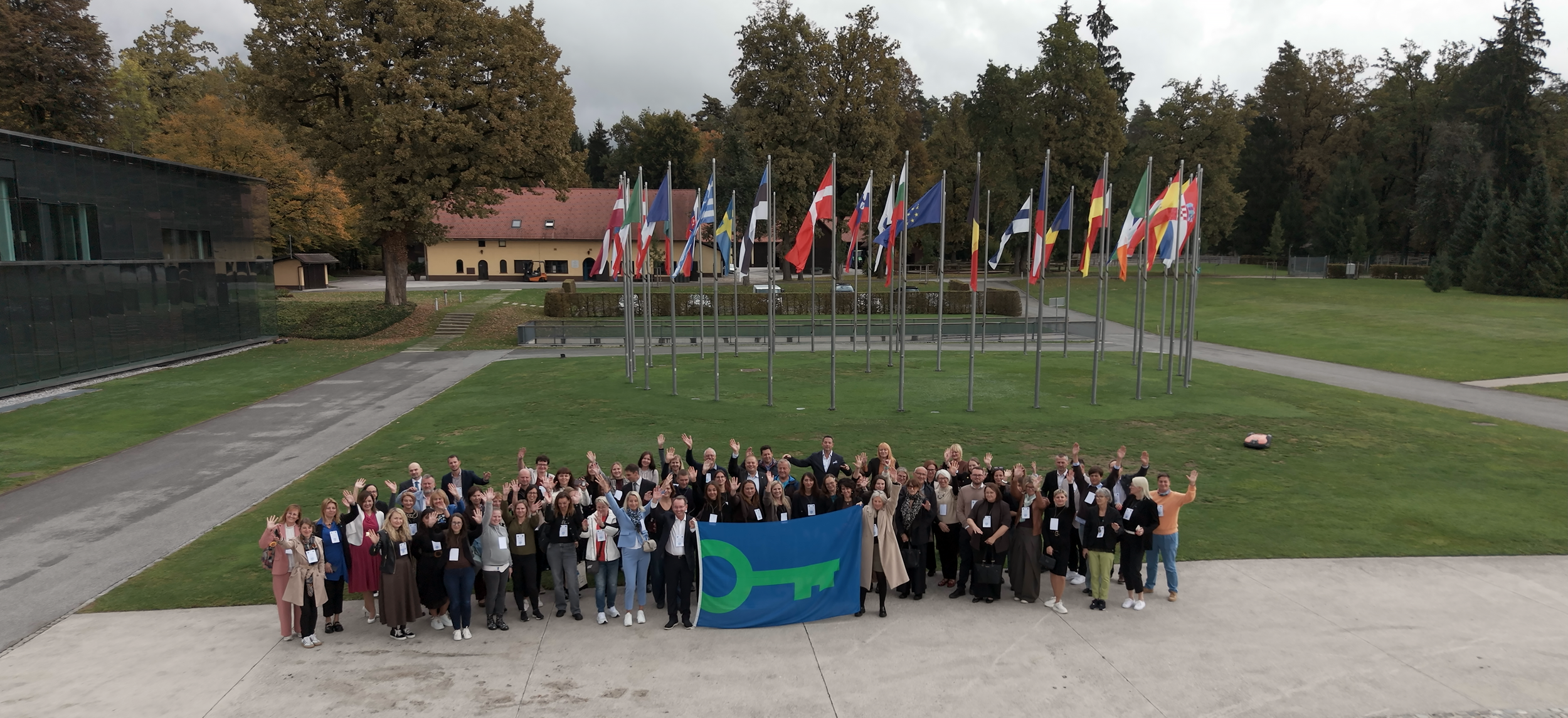
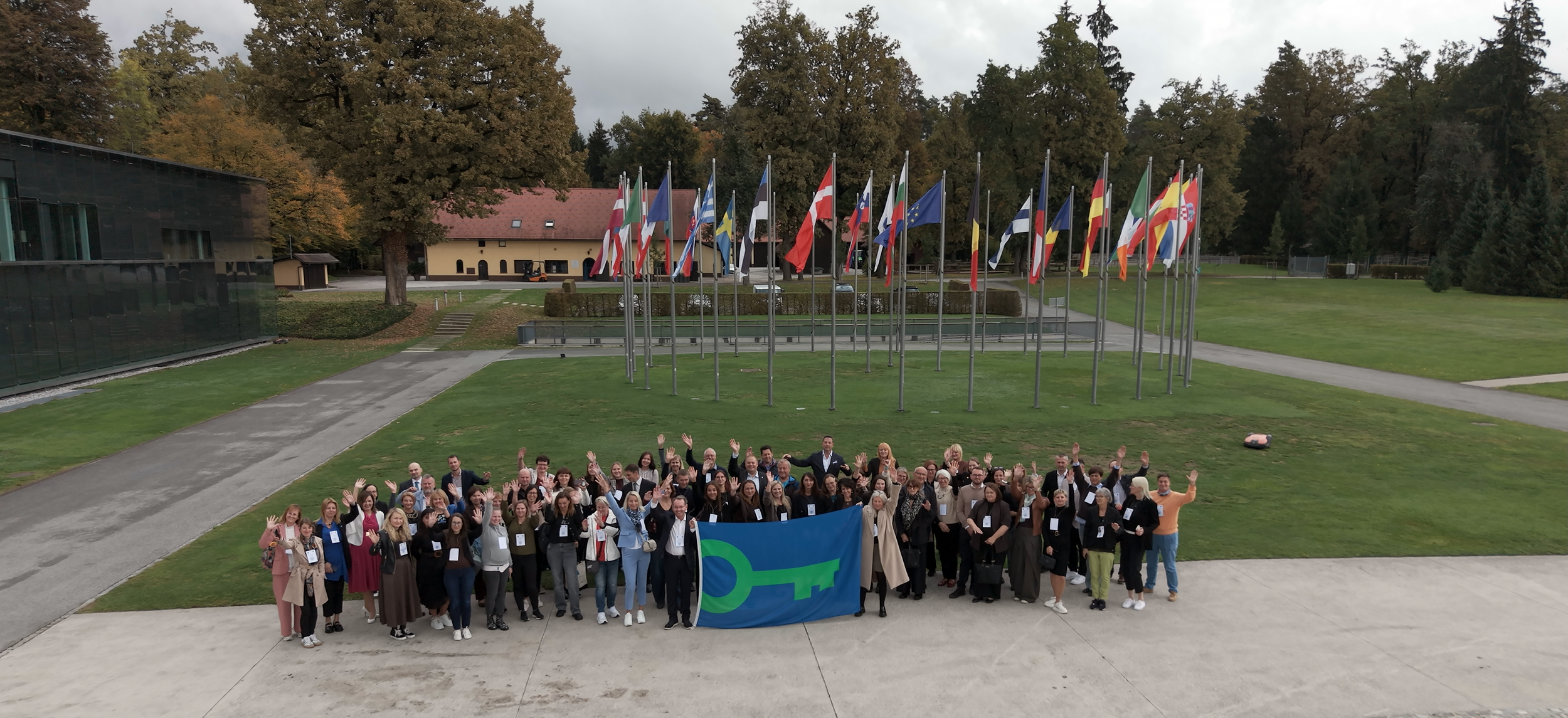
Brdo pri Kranju, Slovenia, 12 October 2026 – More than 100 representatives from tourism, hospitality, business, destination management, the public sector and professional organisations gathered at the Congress Centre Brdo for the 5th Green Key Slovenia Conference. Organised by DOVES – FEE Slovenia under the slogan “Unlocking Green Solutions Through Blue Steps”, the event explored the role of environmental certification in responsible business practices, the development of new opportunities and the long-term competitiveness of Slovenian tourism.
The conference opened with welcome addresses by Fiorenzo Lupieri, President of DOVES – FEE Slovenia; M.Sc. Boris Šušmak, National Coordinator of the Green Key programme in Slovenia; and Marina Ferfolja from the Slovenian Tourist Board (STB). A representative of Barjans, the conference's gold sponsor, also addressed the participants.
New European requirements put credibility in the spotlight
The future of environmental certification is increasingly shaped by stricter requirements for transparency, substantiation of environmental claims and the prevention of greenwashing.
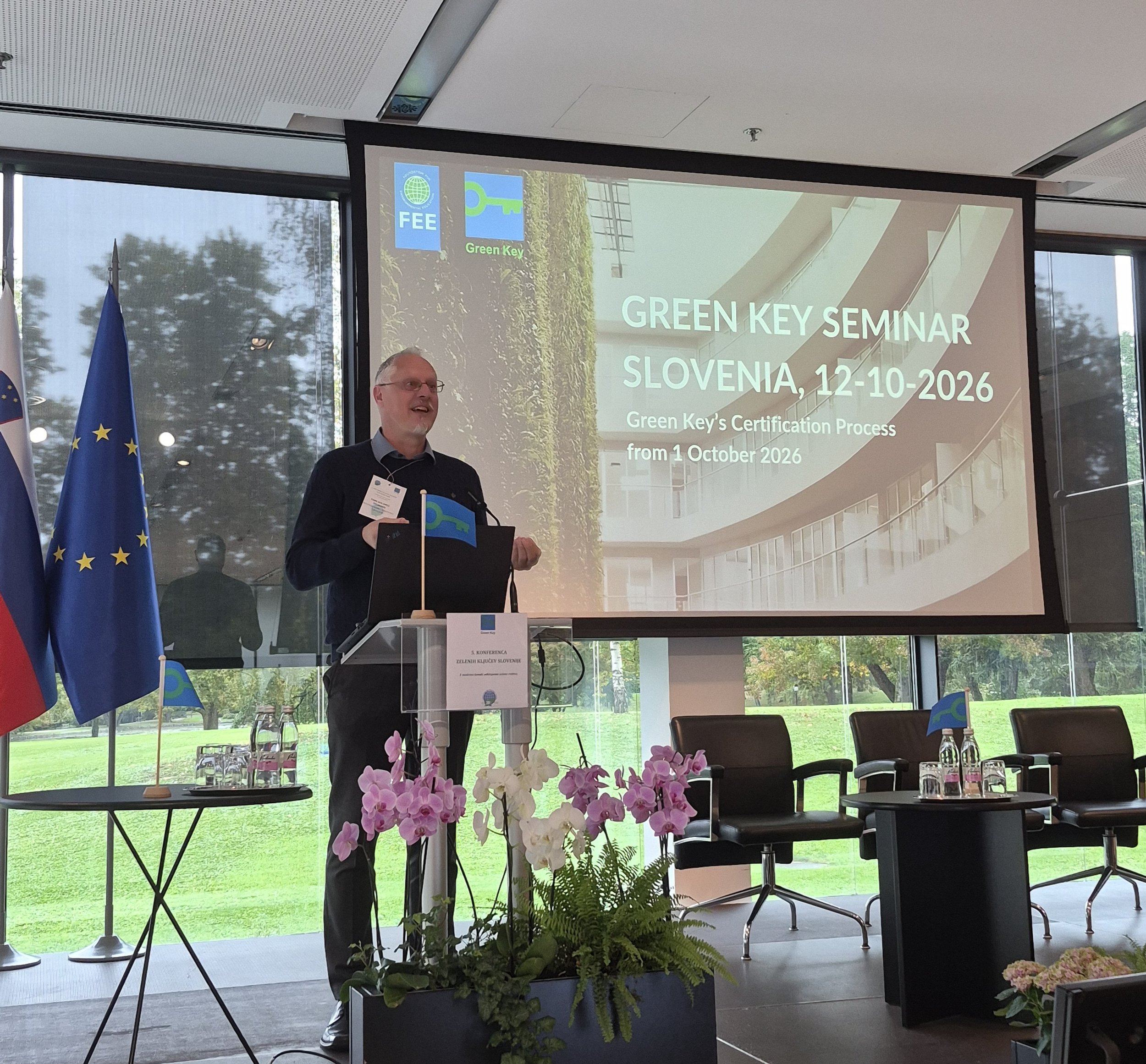
Finn Bolding Thomsen, International Director of the Green Key programme, presented the programme's revised criteria and certification procedures, explaining their significance in the context of the European Directive on Empowering Consumers for the Green Transition (EmpCo).
From 27 September 2026, national measures implementing the Directive apply, strengthening the rules on environmental claims and sustainability labels while providing consumers with greater protection against greenwashing.
In response to these developments, Green Key has introduced revised criteria, certification procedures and rules, which came into effect on 1 October 2026. The updated system provides for independent verification of compliance and independent certification decisions, while existing certificate holders benefit from a transitional period to adapt to the new requirements.
The message is clear: sustainability claims must be supported by verifiable evidence, and certification must be based on transparent and credible procedures.
From certification to tangible business opportunities
How can sustainability commitments be translated into everyday business practice? Representatives of Matjaževa domačija & Zidanica Škatlar, NEU Residences, Sovita and Galerija okusov shared examples of good practice. Their experiences highlighted different approaches to responsible resource management, improving business processes, working with local communities and creating higher-quality guest experiences.
The question of whether sustainability certification is an end in itself or merely the beginning of further progress was at the heart of the panel discussion, “Is Sustainability Certification the Destination or the Gateway?” The discussion was moderated by Meta Pavlin Avdić, a sustainability communications expert and Strategic Director at prvi.prvi agency.
The panel brought together Marina Ferfolja of the Slovenian Tourist Board; M.Sc. Borut Fakin, President of the Primorska Chamber of Commerce and Director of Vinakoper; Tonja Rojnić, Head of Tourism at the Development and Social Institute of Radlje ob Dravi; and Gašper Puhan, Director and Owner of Galerija okusov.
Drawing on perspectives from national tourism policy, business, destination development and fine dining, the panellists explored the value of certification, the business opportunities it can create and the shared responsibility of stakeholders in developing sustainable tourism.
The discussion emphasised that the true value of a certificate lies not simply in obtaining it, but in the changes it encourages — from more responsible business decisions to stronger cooperation and greater value for guests, local communities and the wider economy.
Certification is not the finish line. It is a starting point for further development, continuous improvement and responsible decision-making.
Effective communication is another essential part of sustainability. In her expert presentation, Meta Pavlin Avdić explored how organisations can communicate their sustainability efforts and achievements clearly, authentically and credibly, highlighting why messages must be grounded in concrete action and verifiable facts.
Andrej Težak – Tešky added a different perspective to the programme with a stand-up performance, bringing humour and a relaxed atmosphere to the discussion of serious issues.
Collaboration as the foundation for future progress
Beyond the professional programme, the conference highlighted the importance of personal encounters, sharing experiences and building connections. The question “Can We Connect?” served not only as an invitation to network, but also as a call for closer cooperation between tourism businesses, destinations, the wider business community, professional institutions and the public sector.
The different perspectives and experiences shared at the conference confirmed that the future of sustainable tourism depends not only on criteria, certificates and strategies, but above all on putting them into practice. Knowledge exchange, collaboration across sectors and a willingness to develop joint solutions are essential to turning sustainability ambitions into tangible results.
Shared goals. Different paths. One direction.
Partnerships that go beyond supporting an event
The conference's emphasis on collaboration was also reflected in its organisation. Companies and organisations from a range of sectors provided financial, material and other forms of support, helping create a space for professional debate, the exchange of experiences and new partnerships.
The conference was supported by Barjans as gold sponsor; SURF and Ecolab as silver sponsors; and NEU Residences and Makom as bronze sponsors.
Additional support came from Radenska, Zdravilišče Radenci, Atlantic Grupa – Barcaffè, Gold Restaurant & Hotel, Radgonske gorice, Klet Brda, Gostišče pri Francki, Matjaževa domačija & Zidanica Škatlar and BeEko. Each contributed in its own way to the successful delivery of the conference and the overall experience of its participants.
The involvement of sponsors and partners demonstrated one of the conference's central messages: bringing together different sectors, expertise and interests can create opportunities that extend far beyond a single event.
DOVES – FEE Slovenia would like to thank all sponsors, partners, speakers and participants whose support, knowledge and experience helped make this year's conference a success. Their willingness to collaborate is a reminder that meaningful progress towards sustainability begins with people and is achieved through collective action.