
Impressive social responsibility activities taking place at Park Inn by Radisson Hotel Ostrava
As part of its responsible business programme, Green Key awarded Park Inn by Radisson Hotel Ostrava in the Czech Republic is deeply engaged in different social activities from support to persons in wheelchairs to projects for vulnerable groups in the local community and for the staff of the hotel.

Support to persons in wheelchairs
The whole hotel (including public areas, meeting rooms and guest rooms) is very easily accessible for persons on wheelchairs.
Due to the excellent facilities for disabled persons at the hotel, many international sport events have been held in Ostrava, e.g. sledge ice-hockey world championship in 2009 and para table tennis international tournament in 2011, 2013 and 2015.
In 2013, the hotel became partner of the project „The Europe without barriers“ where a group of athletes in wheelchairs participated in a journey to Gibralltar. The hotel provided the group with facilities for their base camp and with the refreshment for the whole trip.
Projects for groups in the local community
Since 2008, the hotel has been cooperating with the nursery school in Ostrava Poruba. This nursery school is for children with the disorder of autistic spectrum or speech defect. Every year, Park Inn prepares for the children and their parents a Christmas party held in the hotel.
The hotel is as well annually organising a Christmas meeting for families of foster parents. The event is organised together with the Centre of social services Ostrava.
Every year, Park Inn has been organising a day for children with oncology diseases from the Faculty hospital in Ostrava.
Social engagement projects for the employees of the hotel
Since 2014, the hotel employees have started to run for charity (e.g. Rainbow Run, Run for Honza, etc.). The hotel pays the starting fees, provide the equipment (e.g. t-shirts) and the refreshments.
On a regular basis, the hotel is involved in cleaning the neighborhood or the closest nature. Lysa hora (the highest peak in Beskydy mountain), Ema hill and many other nice nature areas have already been cleaned up. The employeees usually meet during days off (weekends) and do the clean up as a short teambuilding exercises.

Hotels act on World Oceans Day
Hotels are showcasing their sustainable fish policies to highlight positive actions on World Oceans Day.
Relais & Châteaux are raising awareness of the need to protect our oceans with chefs offering sustainable seafood menus, consisting of sustainable fish products selected in accordance with SeaWeb Europe's recommendations. The association of 540 hotels and restaurants around the world note it is alarming to think that while the demand for seafood is constantly increasing, fishing stocks have reached their limits. Almost 30% of fishing resources are overfished on a global level. In the Northeastern Atlantic, 40% of fishing resources are overfished beyond their ability to regenerate.
Faced with this reality, SeaWeb Europe and Relais & Châteaux chefs are committed to protecting these resources. The association believes chefs play a key role, setting trends within the industry, and can influence both suppliers and consumers. It was chefs and restaurateurs who were responsible for the bluefin tuna's ability to regenerate over time in the Mediterranean.
It is clear that the impact of climate change also poses new constraints to the food chain. Olivier Roellinger, Vice President of Relais & Châteaux, said, “The ocean is an amazing pantry where nothing is lost, but we cannot waste it or destroy it. It is unacceptable to say that the generations to come will no longer be able to eat from the sea.”
Philippe Gombert, International President said, “Relais & Châteaux properties serve as watchmen, protectors of that which is most precious to the region, pathfinders who open the door to the cuisine of the future with responsibility and commitment.”
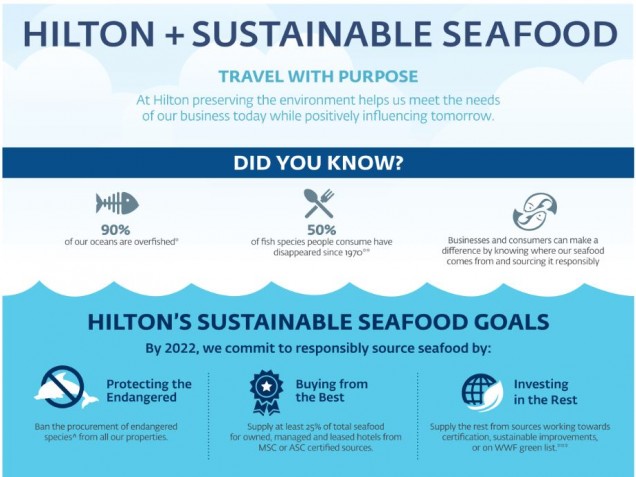
Meanwhile Hilton Worldwide has reinforced its commitment to the environment by announcing multi-year sustainable seafood goals.
Collaborating with World Wildlife Fund (WWF), Hilton has committed to implementing strong, global sustainable seafood goals as part of the company's Travel with Purpose strategy, which was launched in 2011 to use Hilton's passion for hospitality to make a lasting, positive difference in people's lives and the wider world.
Hilton's sustainable seafood goals will comprise the global ban of procurement of endangered species as identified by WWF, and the transition of its seafood purchasing to sustainable and responsible sources. By 2022, Hilton will source at least 25 percent of its total global seafood volume for owned, managed and leased properties from Marine Stewardship Council (MSC) certified fisheries and Aquaculture Stewardship Council (ASC) certified farms. The remaining seafood will be sourced from fisheries and farms working toward MSC and ASC certification, comprehensive fishery and aquaculture improvement projects, or those listed as "green" on WWF regional seafood guides. WWF will help Hilton measure and report progress to ensure the company is on track to achieve its goals.
This commitment follows Hilton's global ban on shark fin from restaurants and food & beverage facilities in 2014. In 2015, Hilton was first-in-industry to receive MSC chain-of-custody certifications in Europe and Asia. In the Americas, Hilton also sources shrimp from suppliers like Sysco that are committed to sustainable seafood.
Maxime Verstraete, vice president of corporate responsibility, Hilton Worldwide, said, “Identifying, implementing and scaling up responsible sourcing practices is a huge and complex task, but we are committed to addressing the environmental and social impacts of our supply chain - beginning with seafood. We are pleased to work with WWF to further engage our Team Members, suppliers and guests, and leverage our company's size and scale to help protect the world's oceans for current and future generations.”
Caroline Tippett, director of seafood, World Wildlife Fund, said, “By committing to buy more seafood from MSC-certified fisheries and ASC-certified farms around the world, Hilton is sending a strong market demand signal for responsibly sourced seafood. When multinational companies extend their commitments across their global operations, it increases sustainable seafood awareness and demand in various markets, which is especially valuable for those where the concept may be less advanced. In addition, it's particularly important that the company will support MSC and ASC, as they represent the strongest certification programmes for responsible seafood supply.”
As well as collaborating on sustainable seafood, Hilton and WWF are also working together to improve the company's water stewardship, reduce food waste, and accelerate the adoption of renewable energy. These efforts they hope will reduce pressure on fisheries, farms, and watersheds around the world.
Hoteliers interested in enacting their own sustainable food policy can take tips and advice from our free Know How Guide.
Source and acknowledgement Green Hotelier.
Explore Lisbon with NEYA Lisboa Hotel's new app
Green Key awarded NEYA Lisboa Hotel presents its innovative APP to aid guests in discovering Lisbon, the capital of Portugal.

The hotel’s main mission is to help guests discover Lisbon and its mysteries in the most sustainable way possible, by foot or bike, thus decreasing guests carbon footprint by implementing environmentally friendly practices.
Guests may choose which routes they would like to discover and what type of programme they would like to follow – family-oriented, romantic, etc. Guests will be able to explore Lisbon’s typical bairros (neighborhoods) without the fear of getting lost, get to know the trendiest spots in town or simply visit the capital’s historical monuments. The app also provides suggestions regarding traditional trade stores and gastronomy, fado, cultural spots as well as artistic and musical events happening in town at the time of their stay.
All routes and interest points are georeferenced. Users may download whichever routes to view offline. Moreover, this app also allows guests to book for reservations and is available for free download in the App Store or Google Play.
Green Key for restaurants is launched on the Åland Islands, Finland
From this autumn and the years to come both Alanders and visitors might have the opportunity to eat at a Green Key restaurant. The programme will officially be launched in September, but four restaurants and cafés have already begun thier work towards Green Key. One of them is Pub Stallhagen.

Participation and vicinity key words when Pub Stallhagen works towards Green Key
In Godby, Åland, you will find is the award winning restaurant Pub Stallhagen. Since 2010 the restaurant is run by Christian Ekström and Johanna Dahlgren. Over the years the restaurantears has been recognized both for the hospitality and the food. Among the prizes is the awards of ”Year's most positive Ålanders” and ”Local food ambassadour of the year”.
"Our food philosophy is that everyone have the right to clean and honest food. We work closely with producers, given both the geographical distance and communication. Working closely for me involves both locally produced ingredients and that you can easily reach each other to talk, "says Johanna.
Promotion of the local community and respect for the environment is a given part of Pub Stallhagens business. Now the restaurant also has chosen to start working towards the Green Key certification. "For us it is an obvious choice. We wanted to work with a tool where we can develop on the basis of the company's potential. The Green Key criteria states what to do, but how you do it is up to your own business," says Christian.
A sustainable business
That Johanna and Christian both are standing strong in thier belives and have confidence in their own business is clearly evident. Christian is convinced that a long-term work with sustainability benefits Åland as a whole: "The destination Åland would be even better if everyone gather under one sustainable roof, where everyone is aware of how we want to be perceived as a destination".
"Working with sustainable development could mean trials, so you have to be a little stubborn. We are mostly driven by curiosity and the desire to create. Like yesterday, I tried to pickle seaweed. I dont know yet what the final result will be, but I get the final results later, "says Johanna.
Participation, seasons and quality
Community involvement is something Johanna and Christian raised several times in the discussions. That this is something very important for the couple is evident. When Pub Stallhagen now is going to do an environmental policy in connection with the work with Green Key, this is not something that restaurateurs want to do on their own. All of the staff will be involved in the creation to find the specifics describing Pub Stallhagens sustainability work and commitments. But that the Åland season will have a part of the policy can be predicted. "We work with seasons. I think you have to miss foods in order to appreciate them. The spring season has just begun, and this week we've got three new local food that we can use; New potatoes, chives and pea sprouts, "says Johanna.
Karin Rosenberg, project manager for Green Key Åland, is very happy that Pub Stallhagen has begun its work with the Green Key: "I often highlight that Green Key is not only an environmental label, but also a proof of quality and sound business practices. This has been obvious in the past, both for those who are labeled with Green Key and those working towards the label on Åland. Pub Stallhagen participation in the program now further strengthens the possibilities to show the correlation between environmental considerations and quality."

The Westin Palace Hotel Milan combines luxury and eco-sustainability
The Green Key awarded five star hotel in the centre of Milan (Italy) is highly committed to encourage its guests to participate in the hotel’s environmental actions.
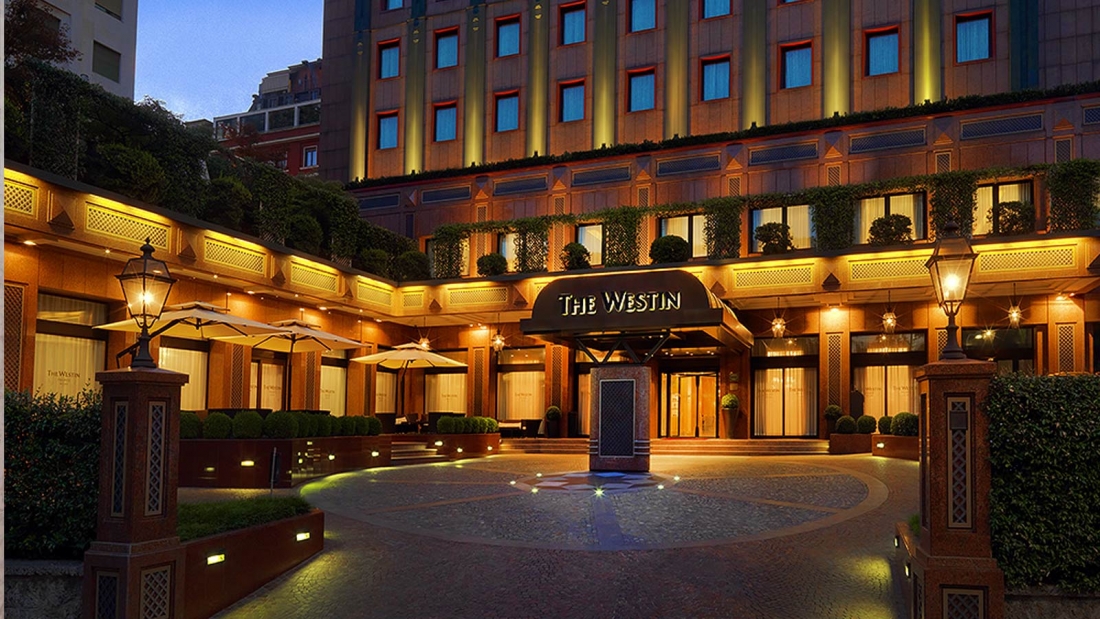
As part of the Starwood Hotel Group, The Westin Palace Hotel Milan runs the “Make a Green Choice” programme, where guests staying more than one night at the hotel are encouraged to participate in the conservation of water and energy resources and reduction in use of detergents through declining housekeeping of the guest room. In return, the guests are offered a voucher for use in the hotel restaurant or bonus points in the Starwood Preferred Guest Programme.
In the guest rooms, guests are encouraged to separate waste. To save paper for newspaper production, guests are offered via a “Pressreader App” to download newspapers and magazines during they stay at the hotel. In the restaurant, the guests will have a wide selection of dishes with products that are locally produced in the Lombardia region of Italy. For the coming period, the hotel is planning additional sustainability activities for its guests, including the project of installing a charging station for electric cars.
Talking Point: Sustainable landscaping
Paul Cawsey, Sustainability Manager for Mitie’s Landscaping business explains how sustainable landscaping for your hotel can be an important part of the customer experience, and not just about ticking a green box.
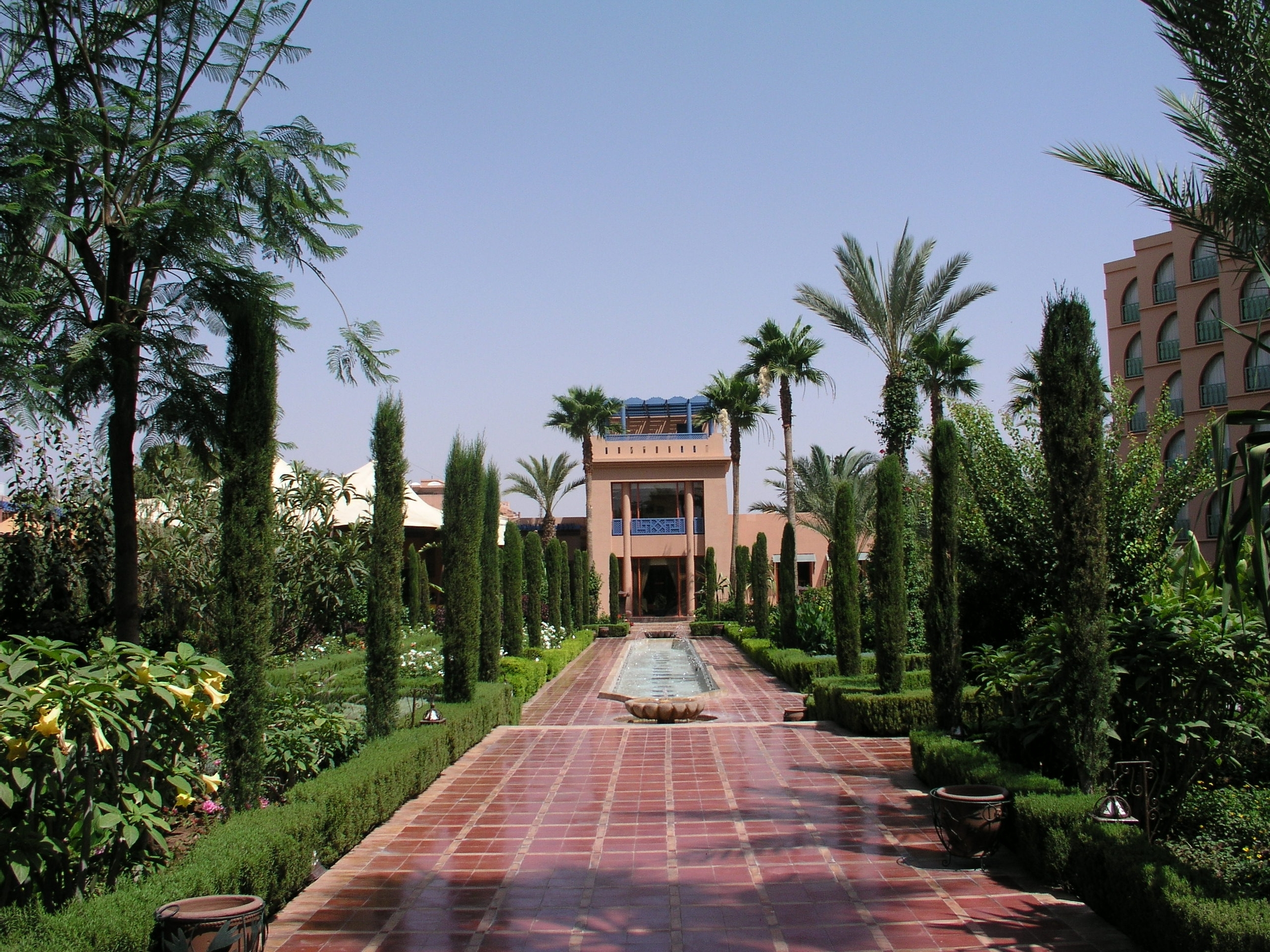
There’s nothing quite so welcoming when you first arrive at a hotel as the sight of beautifully designed landscaping. It’s a part of the brand experience, it adds to the feeling of escape if you’re on holiday. Sitting and walking around superbly kept gardens is just as important as enjoying a meal in the hotel’s restaurant in terms of ‘experience points’.
Hotels should consider the integration of sustainable landscaping practice as part of the customer experience. It’s not just about catering for the more eco-aware customer, or educating on what’s possible, but a cost effective business decision that just happens to be environmentally responsible. Why not show what’s possible when you work with nature, and show off a sustainably designed garden - it can be a business bonus.
What does sustainable commercial landscaping involve?
At the core of sustainable landscaping is the use of design and maintenance practices that suit your geographical climate. Sustainably designed grounds adapt to aspects like local rainfall patterns and are able to survive without much watering. Ideally they don’t require pesticides or fertilisers and although that is challenging to achieve, landscape professionals strive to accomplish it.
The bottom line in business is often measured by monetary gain or loss. If you are worried about budgeting for your landscaping services, then considering a rigorous sustainable approach can save money. By designing your grounds in harmony with local conditions, you can save costs on:
- water consumption
- purchase of pesticides and fertilisers
- energy use for power gardening equipment
For example, we are exploring prairie style planting for our clients in the United Kingdom, to reduce the amount of water required during establishment and growth periods, along with installing self-watering planters that have pollinator friendly planting schemes. This is a departure from the traditional amenity planting schemes often associated with hotels. However, it is a cost effective approach that also introduces a new type of landscaping aesthetic which is designed to last.
The biggest ecological priority and responsibility we all face is increasing biodiversity. Biodiversity as part of sustainable landscaping means providing safe habitats for animals, insects and even plants that have become displaced from their own natural environments.
Plants and animals are losing their habitats due to urbanisation and that has consequences for all of us as our ecological balance is disrupted. It affects pollination of crops, diversity of food resource, species extinction and more.
All species depend on each other. According to the Convention on Biodiversity, “At least 40% of the world’s economy and 80% of the needs of the poor are derived from biological resources. In addition, the richer the diversity of life, the greater the opportunity for medical discoveries, economic development, and adaptive responses to such new challenges as climate change.”
The potential of sustainable hotel landscaping
The good news is that there are different ways to engage in sustainable landscaping practice. They don’t involve anything particularly complicated or expensive and encourage a positive interaction with nature and even your neighbours, commercial or domestic. Furthermore, you’re enforcing your position as a responsible business that manages and respects natural resources.
The birds and the bees
Improving wildlife biodiversity by installing bird boxes around your hotel grounds is a simple thing to do. According to research by the UK’s Royal Society for the Protection of Birds (RSPB) the decline of native birds in the UK is still a major cause for concern. The primary cause of this is declining natural habitats and changes in agricultural practices. We can improve the effects of birds’ declining habitats by giving them safer, alternative places to live and thrive.
The same applies to attracting bees. The global bee population is decreasing at a rapid rate. It goes without saying that the threat to plant and crop pollination increases as the bee’s decrease.
The installation of bee boxes means you could provide safe new homes for them, even in the heart of a city. For some clients we recommended the installation of solitary bee boxes on their roofs or within landscaped areas. It is unobtrusive, inexpensive and takes little time and effort to install and maintain. We are currently in discussion with Urban Bees and the Royal Horticultural Society to explore new research and application options for bee boxes within commercial properties.
The added bonus is the increased variety of birds and insects that would grace your hotel’s green spaces to delight guests and be a talking point of interest. Having your own beehives adds its own dimension with the possibility of having home-produced honey as a unique and attractive service offering.
Go wild
Encourage local wild flowers and plants to grow in your grounds. Not only are they beautiful, but they are accustomed to the geographical climate, and are likely to thrive and attract wildlife such as birds and butterflies. There’s no reason that you cannot create an orderly, peaceful and attractive setting by carefully planning space for wild flowers.
Mown paths and wild flower meadows have become features in towns with the intention to encourage threatened local species to survive and propagate as part of a wider environmental policy. Where better to help your community than giving some of your own grounds for that purpose? If you need to make it a profitable feature, create a paying service in that space that relates to the planting project – a nature café, or evening bar or evening walk lit by solar powered lamps. It could be a space that your guests enjoy by day and by night. Why not start a programme where guests could donate to sustain the wild flower project as separate concern – for the benefit of any visitors you may welcome to use the grounds?
On golf courses, the spaces adjacent to the fairway or rough areas are ideal for ecologically friendly planting. At Mitie we offer advice on increasing the floral diversity in these spaces which attracts pollinators, invertebrates and birds. It can also be incorporated around golf course water features as well as standard decorative ponds.
Community
Hotels tend to be landmark premises in a town or a city. Why not start or get involved with community ‘green’ projects to engage with your local stakeholders and use your landmark status for a good cause? It also enhances your reputation by showing a commitment to corporate social responsibility practice. Whether you contribute towards a community garden, or plant one yourselves and involve your community, it helps to share your time and resources for the improvement of the local environment.
Mitie has been involved with the Poppy project – a group undertaking that involved planting field poppies with ex and injured British Army soldiers. Planting the poppies is not only symbolic, but will increase biodiversity in the area by attracting butterflies and bees. Furthermore it shared the message that simple solutions can make a difference to improve your local ecological health.
The power of the pond
Water features often grace hotel gardens – they might be small ponds on a terrace or large outdoor features supporting a myriad of wildlife. As well as providing a great visual aspect, these environments encourage biodiversity. Add a pond or water fountain and watch as the wildlife comes to you.
Additionally, pond surveys can be carried out to assess and enhance these features for water birds, insects and even protected species. For example, in the UK swallows have been in decline as their preferred habitats are disappearing due to urbanisation and modernisation. They feed on flying insects, which they find in wetland areas and pastures which are also in decline due to agricultural practices. As swallows do not stray far from their nest to feed, nesting and feeding areas must always be close together. Therefore, creating and managing ponds in tandem with bird boxes could make a positive impact on the swallows’ declining numbers. It really is that easy to make a positive difference on an entire species.
In water stressed areas, hoteliers should think hard before creating a water feature or landscaped area that requires constant watering. Hotels often worry that guests expect a certain kind of green landscaping or outdoor area, but guests are increasingly aware of the environmental impact of their stay. Clear messaging that explains a more arid grounds area is part of a biodiversity programme or sustainability project can help to manage guests’ expectations about a hotels’ siting and the region. Explain what the more unusual flora and fauna a guest might encounter are, and that they are more likely to visit because of the native planting and landscape. As water risk grows for hotels in many regions around the world, guests may have to accept that multiple swimming pools or a lush golf course set in the middle of the desert are too unreasonable demands to make of a property in that region.
Get clued up
If your hotel is committed to following sustainable landscaping practice, then have a biodiversity survey undertaken of your premises. A survey, with the help of an ecologist, will examine what habitats already exist in your grounds and recommend how to make the best of them.
You can make your sustainable grounds a part of your paying business by pairing it with service delivery, whether it’s food and beverage or wellness-related like a spa. Being sustainably responsible doesn’t mean that you undertake a costly experiment, but you can integrate it as a valid return on investment as it enhances your business.
Source and acknowledgement: Green Hotelier.
Kaizen - Successful Challenge in Hotel Rich and Garden Sakata, Japan
Hotel Rich and Garden Sakata, located in the northern region of Japan, was awarded Green Key as the first hotel in Asia in 2009.

In 2005, when reconstruction of the hotel was planned, Mr. Kumagai, the President of Hotel Rich and Garden Sakata, considered to apply Nordic design for it because of the climate of Sakata being very cold for half of the year, he thought it would be similar to Nordic countries.
During Mr Kumagai's visit to Finland and Denmark for inspiration, he found the concept of Green Key, and he adopted the Green Key criteria as the basic policy for renovation of the hotel. It was also a reason to take Nordic countries as a model that they received highly rankings of happiness nation. Mr. Kumagai said “We hope to create the community hotel where people can enjoy food and music, not just a convenient business hotel.” Hotel Rich and Garden Sakata is now very famous for their environmentally friendly management, as their guest rooms and banquet rooms provide the Danish design and atmosphere.
Three years ago, Mr. Abe joined the hotel and took over Green Key project from his predecessor. Mr. Abe previously worked at a major electronics manufacturer as ISO expert. He knew that Hotel Rich and Garden Sakata was certified with the Green Key award and he appreciated this very much. After he became in charge of environmental operation of the Hotel, he has worked on the "5S steps concept"* in addition to the Green Key criteria:
- Sort: Sort out & separate that which is needed & not needed in the area.
- Straighten: Arrange items that are needed so that they are ready & easy to use. Clearly identify locations for all items so that anyone can find them & return them once the task is completed.
- Shine: Clean the workplace & equipment on a regular basis in order to maintain standards & identify defects.
- Standardize: Revisit the first three of the 5S on a frequent basis and confirm the condition of the working site using standard procedures.
- Sustain: Keep to the rules to maintain the standard & continue to improve every day.
Mr Abe's environmental reform for the hotel led to success, not just maintaining the Green Key, but also further improving efficiency and safety in the hotel management. Mr. Kumagai is very satisfied with Mr. Abe’s performance and he found that Green Key is the one of triggers for recruiting good human ressources.
---
Kaizen, Japanese for "improvement." When used in the business sense and applied to the workplace, kaizen refers to activities that continuously improve all functions and involve all employees from the CEO to the assembly line workers. It also applies to processes, such as purchasing and logistics, that cross organizational boundaries into the supply chain. it has been applied in healthcare, psychotherapy, life-coaching, government, banking, and other industries. By improving standardized activities and processes, kaizen aims to eliminate waste (see lean manufacturing). Kaizen was first implemented in several Japanese businesses after the Second World War, influenced in part by American business and quality management teachers who visited the country. It has since spread throughout the World and is now being implemented in environments outside of business and productivity. Source: Wikipedia.
NH hotel Ghent Belfort supports local initiative to reduce food waste
Jurgen Doise, hotel manager of the Green Key awarded NH hotel Ghent Belfort in Belgium, and local entrepreneur and friend Stef Mintiens wanted to put a stop to the massive amounts of food that are thrown out every day before even reaching the consumer. That’s how the ‘Freego-project’ came to life.

About 2 years ago, during the refurbishing of the NH hotel Gent Belfort, Jurgen Doise was looking for a new home for some old (still working) room fridges that had to be replaced. His friend and local entrepreneur Stef Mintiens was working on an idea to share fresh left-over food (from restaurants, etc.) with people who are interested in free food. And that’s how the concept of ‘Freego’ was developed.
Stef started with attaching one of the donated fridges to the front of his house in the centre of Ghent and asked some relevant companies to donate fresh left-over food. With the help of some local publicity the project started rolling out very fast. Now there are several ‘Freego’s ´in different cities in Belgium.
Companies or individuals can donate fresh food (no prepacked or ready-to-eat meals from the shop). The food can be consumed by everyone, however people are asked not to take more than they need in order not to corrupt the system. And it seems to working very well.
In the last 18 months Stef was able to share 1.300 portions of soup, 7.000 sandwiches, 2.500 vegetarian burgers and 3.000 fresh pasta dishes. One of the regular suppliers says he already saved a full container of food waste in the last year. So also for the suppliers it is very beneficial.
Green Key present at the International Conference on Responsible Tourism
The 12th International Conference on Responsible Tourism in Destinations took place in Jyväskylä (Finland) on 9-10 June 2016. The objective of the conference was to give the participants a possibility to develop their global perspective through sharing experiences of international tourism operators, trade, specialists and academics on different topics linked to the main theme.
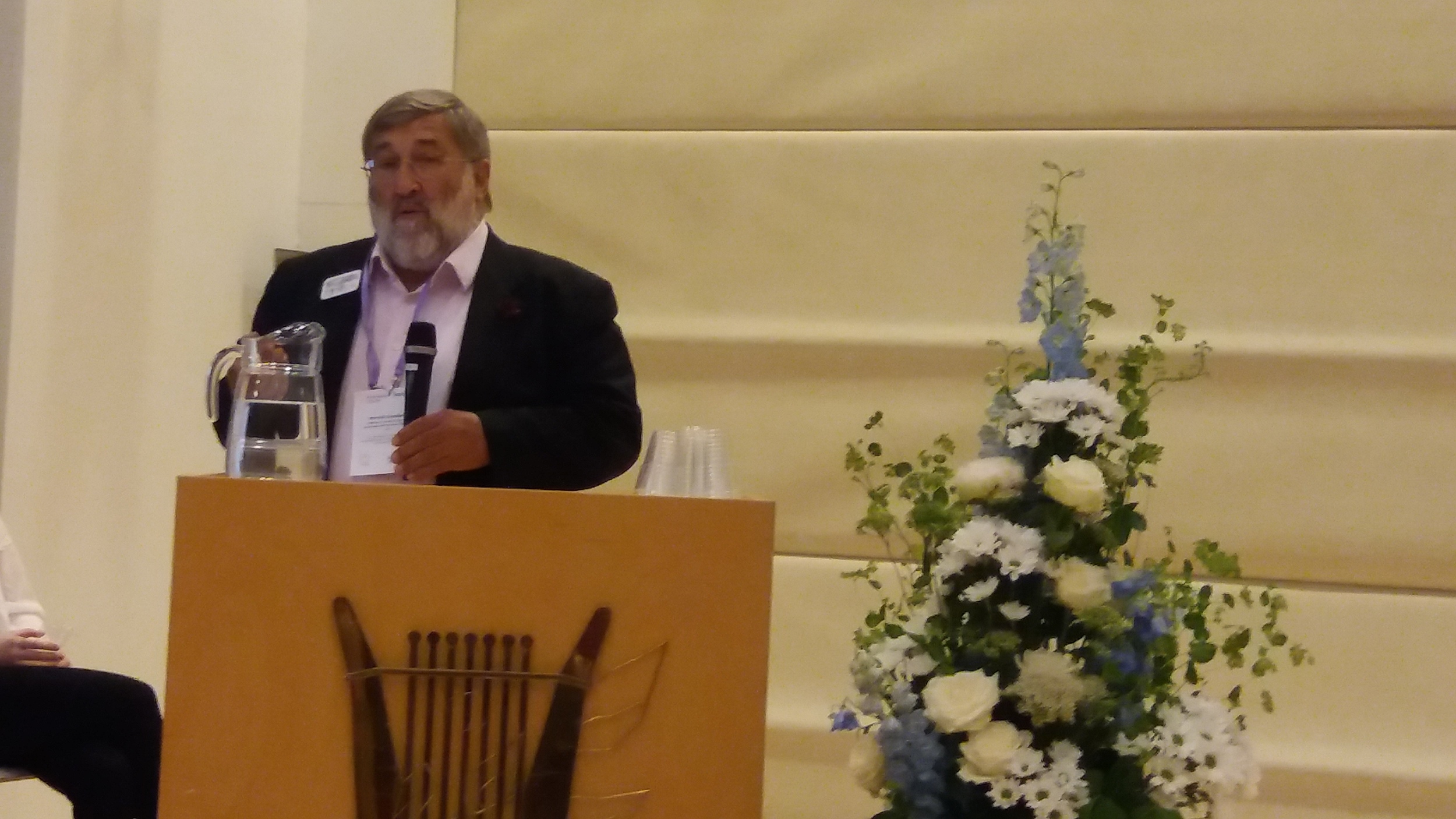
Professor Harold Goodwin
The main themes for the conference this year were four seasons and responsibility. The venue was held at the campus of Jyväskylä University for Applied Sciences, in the beautiful lake district in Middle Finland.
Harold Goodwin, Professor of Reponsible Tourism at Manchester University and founder of the International Conference on Responsible Tourism (ICRT) network, welcomed the audience and gave an insight to where we stand today. Other keynote speakers included Professor C. Michael Hall, travel organisation Visit Finland, several industry operators from cruise line Viking Line to TUI Travel and local tourism operators and entrepreneurs.
The hotel and restaurant industry examples came from two local entrepreneurs namely Hotel Yöpuu and Restaurant Arts & Crafts. Hotel Yöpuu sees responsibility as an integral part of their daily operations and is a proud provider of many local goods. They also emphasized the long-term commitment: local products are not always the cheapest option, but they see it as an investment for the long-lasting relationships with local vendors and their possibility to continue their operations. Local food was one of the most discussed topics, as well as, especially as being in the lake area of Jyväskylä, using the resources of local nature like white fish from the thousands of lakes in Finland.
Green Key was represented by Green Key Finland as an example of a practical tool for hospitality. The town of Jyväskylä got their first Green Key awarded hotel in April 2016 and the proud holder of the award is Solo Sokos Hotel Paviljonki. Their environmental work was presented as an excellent example of practical efforts, high energy and water efficiency as well as high involvement of staff, guests and partners.