
Coastal Cleaning Day arranged by the Hotel & Beach Club Villa Pescadores, Mexico
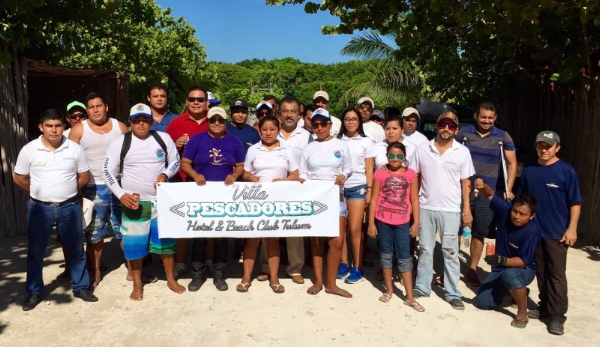
The Green Key certified Hotel & Beach Club Villa Pescadores organised a coastal cleaning day in the Tulum National Park for its employees as well as for representatives of the municipality and of the local tourism industry.

The coastal cleaning day was arranged to educate participants about the conservation of biodiversity through the correct management of solid waste. 41 volunteers took part in the cleaning day, among them employees of the hotel, representatives of the municipality, Caribbean tourism providers, as well as employees from the hotel Zazil-Kin.
In total, the participants collected 70 kg of glass, 6.5 kg of plastic and 220 kg of other solid waste. After the clean-up a recycling company took care of the proper disposal of the collected waste.
New Cooperation between Green Key and Safe Escape Concepts (SEC)
Safe Escape Concepts is an ISO certified consultancy in the field of safety and orientation in buildings, on ships, on off-shore platforms, for events and in the navy. Their main goal is to promote tourism for all by improving safety and accessibility for people travelling – either for leisure or for work.

In cooperation with InformMii Evacu8mii DirectMii , SEC has put three systems into one app that provides information about directions from and to a building, accessibility information for people with disabilities, as well as evacuation routes within a building. In the hospitality industry, hotels could benefit from this app by offering their guests easy access to information about safety and services in and around their establishment. SEC’s app provides a valuable tool for standardised safety communication that can be used internationally. The app incorporates safety standards set by the International Organization for Standardization (ISO), the International Maritime Organization (IMO) and the World Tourism Organization (UNWTO).
If you would like to learn more about Safe Escape Concepts, please visit their website

World Tourism Day 2016: Tourism for all – promoting universal accessibility
On this year’s World Tourism Day, which is celebrated on 27 September each year, the World Tourism Organization (UNWTO) is calling for the right to explore the world we live in to be extended to all. Green Key has already endorsed this right in its new corporate social responsibility criteria.
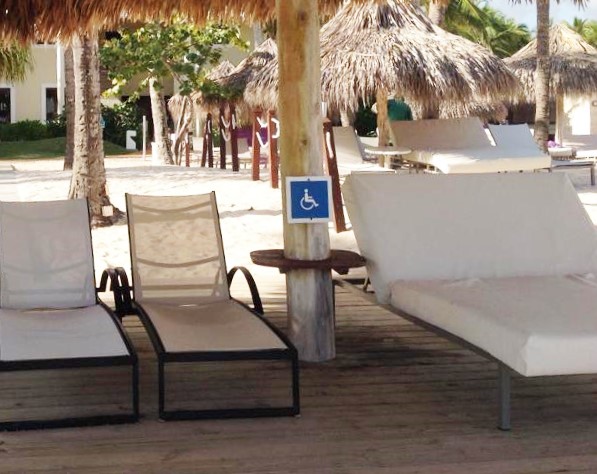
Promoting universal accessibility in tourism is about creating environments that allow everyone to enjoy the pleasure of travelling, no matter what their age or physical condition. At one point or another, everyone will have special needs during their travel, be it because of small children, advancing age or temporary or permanent disabilities.
Only if all of the world’s citizens have access to tourism can the industry be truly sustainable. For that reason, Green Key’s new corporate social responsibility criteria include guidelines on how to provide access for people with special needs. These do not only take guests into consideration but also the staff and other users of the establishment.
If you would like to learn more about the World Tourism Day, please visit UNWTO’s website
Green Key at the international conference on Education for Sustainable Development in Ahmedabad, India
Between 16-18 September, FEE's Indian member organisation CEE (Centre for Environmental Education) hosted an international conference on Education for Sustainable Development (ESD) in Ahmedabad, India. Green Key International was invited to talk about tourism eco-labels and their value in ESD.

Subsequent to the General Assembly of the Foundation for Environmental Education, The FEE head office as well as the FEE members were invited to participate in the international conference on Education for Sustainable Development at the campus of CEE India. The three days of conference were filled with different workshops and plenaries mainly focusing on ESD for transforming education for children and youth.
Together with the International Blue Flag Director, International Green Key Assistant Isabel Lissner gave a presentation on tourism eco-labels and their value in ESD. The focus of the presentation was on the educational value of Blue Flag and Green Key both for tourists and the applicants.

Over 2,500 sites across the world hold the Green Key award!
Green Key International is pleased to announce that there are now over 2,500 Green Key awarded sites across the globe.
As sustainability becomes a top issue for tourists and the tourism sector, the Green Key programme is continuously growing and expanding on the world map.
For this great achievement we would like to thank the Green Key National Operators for all the hard work, and all awarded sites for their commitment to the environment.
Click here to find information on the awarded sites.

Green Key Denmark to attend "Sustainable Brands 2016 Copenhagen" conference
On 26-28 September over 500 sustainable brand leaders will gather at the Radisson Blu Scandinavia Hotel in Copenhagen to share ideas and practical know-how on sustainable solutions. Green Key Denmark is a partner in this conference.

Sustainable Brands 2016 Copenhagen is featured by Sustainable Brands, a global community of sustainable business leaders from different industry branches. Through plenaries, breakout sessions, workshops and networking events global industry leaders will get the chance to exchange their sustainability success stories and to create new partnerships. Green Key Denmark will be attending the conference and is presented as a partner of the event.
The conference will take place at the Radisson Blu Scandinavia Hotel in Copenhagen, which has been awarded the Green Key since 2015.
Industry collaboration provides free tool to measure hotel water footprints
Water scarcity is one of the biggest challenges of our century. Water quantity and quality are both under threat. The hotel and tourism industry have via joined actions developed a tool that can be of help in this challenge.
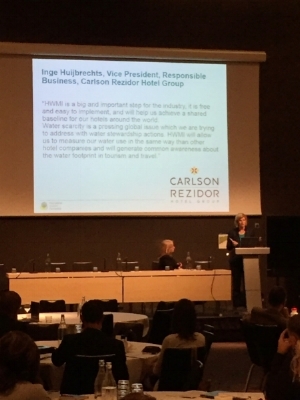
The Hotel Water Measurement Initiative (HWMI) is a free methodology and calculation tool that enables any hotel anywhere in the world to measure and report on its water use for guest stays, meetings and events. It provides a consistent measurement of hotel water footprints for corporate travel buyers and complements the very successful Hotel Carbon Measurement Initiative which is used by over 24,000 hotels worldwide.
The HWMI demonstrates how competing companies can come together to overcome common water challenges and drive responsible business practices forward in the tourism sector.
The HWMI methodology was developed by a working group of 18 global hotel companies facilitated by the International Tourism Partnership (ITP) with technical support from KPMG and input from a panel of global water experts.
Green Key Sweden attended the launch of the HWMI which was held in connection with the Stockholm Water Week on 30th August.
The HWMI tool will soon also be available to Green Key establishments on the Green Key website, made possible via funding from Radisson Hotel Group.
Talking Point: Hotels Can Take Bigger Strides to Cut Water Use
At the World Water Week experts gathered in Stockholm to discuss the impending water crisis and what needs to be done to tackle it. Towel re-use programmes are all very well but in this Talking Point, Jonathan Benjamin, global president of Xeros says, as a high water consuming industry, the hotel sector needs to do a lot better.

According to the Guardian article by Richard Hammond, ‘Why sustainable tourism is the travel industry’s duty’, the sector as a whole is not particularly kind to the environment, to say the least. Airlines, hotels and their associated suppliers generate huge amounts of waste and pollution, accounting for 5% of global emissions.
Whilst ecotourism is a growing trend with thousands of people each year opting for holidays that have a reduced carbon footprint, the vast majority of people don’t actively seek out these sorts of holidays. Rather, most people are aware of the need to ‘be green’ and care about the environment but they expect airlines and hotel companies to lead the way in terms of helping them fulfil this.
Many hotels have embraced towel reuse schemes, which certainly help establishments save water and energy. Results from a recent survey by Xeros showed 85% of people reuse towels because they care about the environment. However, there are much bigger strides hotels can take in terms of their approach to saving water, energy and waste but still boost customer satisfaction.
Simple ways to reduce water consumption include dual-flush toilets, lo-flo taps and aerator shower fittings. Hotels can ensure housekeeping teams flush toilets only once and kitchen staff know not to leave taps running. Clever landscaping can reduce the need for watering and hotels can collect rainwater run-off to irrigate plants. Greywater harvesting can turn shower water into water for flushing, and leftover drinking water can be deployed in cleaning cycles.
Undoubtedly laundry is a heavy water use area of the hotel, but there is an opportunity to combine laundry with a water saving message for guests to consider the environment.
Savvy hoteliers should consider rethinking the role of towels in their overall brand story. Towels are a relatively unexplored branding touch point in the customer journey – they have the potential to be an emotional tipping point turning a visitor into a loyal customer.
Encouraging guests to reuse their towels undoubtedly has an impact on a hotel’s bottom line as well as the environment. But introducing eco-friendly laundry facilities goes that extra step and is something to really shout about when it comes to telling your hotel’s brand story.
Xeros’ survey showed 77% of people said that when choosing a hotel, they actively search for places that have eco-friendly laundry facilities.
Whilst traditional washing machines rely on high temperatures and harsh chemicals to get fabrics clean, Xeros’ polymer beads help reduce chemicals and water footprint. The Hilton Los Angeles reduced water consumption by 83% as Xeros uses two litres of water per pound of laundry, compared with 12 litres per pound in a traditional washer. The hotel reported annual savings of £15,698, but with California in the midst of a drought, the water saving helps make the hotel that much more sustainable.
Steve Thompson, director of property operations, Hilton Los Angeles/Universal City, said, “The Xeros system is the exact type of solution that many businesses in California need, as it helps to significantly reduce water while improving our laundry cleaning capabilities.
“We are doing our part to meet the state’s water restrictions, and we are actually able to improve our customer experience by providing cleaner linens. It’s a win-win situation no matter how you look at it.”
Hotels can take lots of practical actions to reduce their water footprint but guests are a big part of the story. In some countries hotel guests use up to ten times more water per day than is usual for local people. Encouraging guests to consider the environment, their location and their use of water is an important message hotels can share.
Source and acknowledgement: Green Hotelier.
Enjoying and caring for nature rolled into one – A best practice from México
The travel company México Verde who manages the Green Key certified campsite Resort de Aventura encourages their guests to participate in a beach clean-up after taking part in their sandboarding activity.

México Verde is a travel company that offers different kind of eco-tourism activities, and that also manages the campsite Resort de Aventura which has been awarded with the Green Key since 2015.
One of the activities México Verde is offering is sandboarding, a sport where a snowboard-like board is used to slide down sand dunes. After the activity, the tourists are informed about marine litter and its negative effects on the environment and on the local population of turtles in particular, and are invited to take part in a small beach clean-up.