
Crowne Plaza Copenhagen Towers, an award winning hotel focusing on sustainability
Green Key awarded Crowne Plaza Copenhagen Towers from Denmark won the EcoTourism Award in 2010 as the world’s greenest hotel. The hotel has very high environmental standards with a carbon neutral energy system and strong use of organic products.
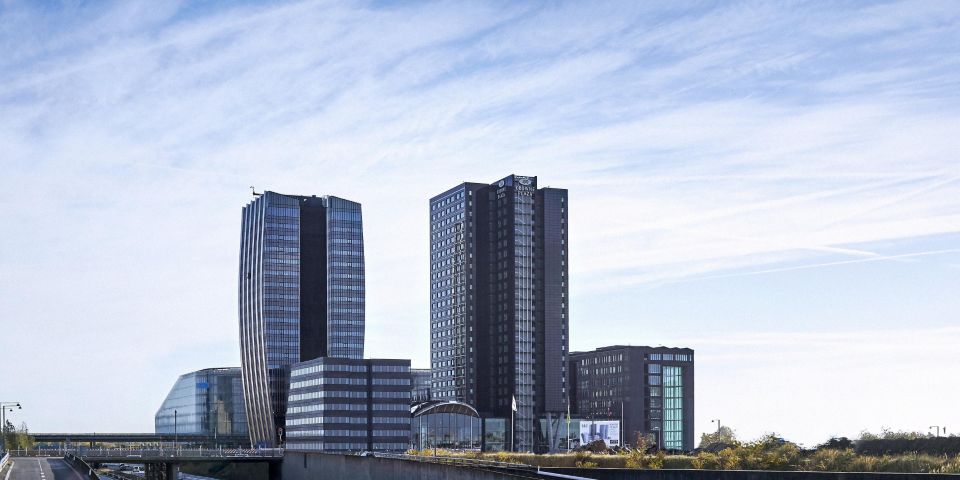
Crowne Plaza Copenhagen Towers is using its energy from renewable sources. The facades facing south, east and west are covered with solar panels, and the heating and cooling system is using a groundwater installation. This means that the hotel is using 65% less energy compared to other similar hotels.
Already in the lobby of the hotel can the guests feel the green atmosphere through the presence of thousands of trees and plants. The rooms have been decorated with recycled furniture from the Danish design company Paustian. In the bathrooms products containing natural components from the brand Eco-Boutique are offered.
In the restaurants and cafés the focus is also on sustainability. The coffee offered in the restaurants and cafés comes from a sustainable producer in Indonesia which is also supporting the protection of orangutans in Sumatra.
Crown Plaza Copenhagen Towers is located in convenient distance from Copenhagen city centre and Copenhagen Airport, easily reachable by public transportation. In the spirit of the hotel, Crowne Plaza Copenhagen Towers offers its guests the possibility to rent electric bicycles and cars.

Chemical-Free Pool Cleaning at Camping 45 in Sweden
The Campground “Camping 45” in Torsby, Sweden uses the latest water treatment technology to clean its pool without additional chemicals.
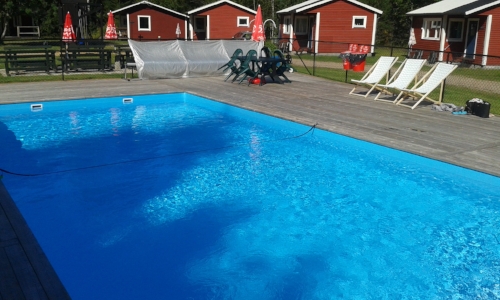
The water purification encompasses four steps and doesn’t need additional chemicals, except 3 kg of salt per cubic meter. In the first step, a coarse filter removes larger particles such as leaves and hairs. In the second step, the water is filtered through a sand filter that removes smaller particles, oils and bacteria. After that, UV light is used to clean the water from bacteria and to prevent algae growth. In the last step, an electrolytic cell produces a small dose of chlorine from the salt which is dissolved in the water. Any excessive chlorine or sodium turns into salt again.
Furthermore, the pool is heated by a sun foil that covers the pool at night and when it is not in use. In winter, a protective screen made of galvanised steel covers the pool and shields it from debris and snow which means that the water can remain in the basin throughout the winter. In this way, it is not necessary to refill the pool in springtime.

Greywater Harvesting for Hotels
Water stewardship is an extremely important aspect of good environmental practice for hotels. Many use reduced flow and flush in bathrooms, but how many are recycling water?
Water re-use is becoming core to many companies’ sustainability efforts and it’s never been more important. Freshwater withdrawals have increased globally by about 1% per year since the 1980s (UN, 2016) and it is estimated that water scarcity now affects 40% of the global population (CAWMA, 2007). Even in the UK some areas are reporting difficulties in meeting demand.
Hotels often do a lot to manage water consumption. Low flow taps and showers or aerators, reduced flush toilets or no flush urinals, sensor activation and good housekeeping practices all help to reduce the amount of water per guest, per room and per stay. But, even with these measures many guests admit to using much water during a hotel stay than they would at home, and in some water scarce areas, the difference in consumption between a hotel guest and the local population can be up to 20 times and dozens of litres.
Anything hotels can do to better manage their water consumption is a good thing, but how many look at recycling water?
Significant water consumption savings can be made from re-use initiatives. Rainwater harvesting can reduce mains water consumption by up to 30% whereas greywater recycling can save as much as 40%. Aside from lower metered water bills, companies can also benefit from reduced risks of storm water flooding, decreased sewerage charges and lower energy costs associated with water supply.
Last month on World Water Day Waterscan unveiled its next generation range of greywater recycling and rainwater harvesting technologies. The new water re-use solutions offer commercial organisations a variety of cost-efficient, reliable and highly effective options to help achieve their sustainability goals.
Claire Yeates, a Director at Waterscan said: “Many companies are aware of the benefits of water re-use but are naturally concerned about payback times and the potential operational impacts of installing new technologies. Add to this reliability issues from early-to-market systems and it’s easy to see why widescale uptake of water recycling has been hindered. We firmly believe that greywater recycling and rainwater harvesting can play a significant role in many company’s water strategies and that is why we are bringing new best-in-class technology to market.”
The various water recycling systems have been developed to give greater system design flexibility in line with customer priorities and requirements, plus a 30% faster return on investment. Waterscan systems now feature:
- Multiple tiered redundancy to ensure complete integrity of supply.
- Built-in telemetry which transmits system data and live diagnostics for preventative maintenance.
- Siemens smart user interface for usage data and enhanced system monitoring.
- Variable speed, load sharing pumps, insulation and slow close valves for an even quieter operation.
- Low energy components so the system can produce 1m3 using just 1.5Kw/h energy.
- A smaller system footprint which reduces installation costs and impact on building footprint.
Barry Millar, Operations Director at Waterscan, said, “Our new water re-use systems are now designed and largely built in the UK using modular components. This enables us to meet clients’ exact specifications in line with individual business strategies and site requirements. Our complete service involving design, supply installation and maintenance of water-saving systems, along with our consultative approach, gives us a unique ability to deliver optimum results across varied client property portfolios. All of this means that our clients will benefit from a faster return on investment and still have complete confidence in their operations.”
Greywater Recycling in Action at Premier Inn
In partnership with its client Premier Inn, Waterscan installed a greywater recycling system in water-scarce Abu Dhabi. The initiative is vastly reducing mains water consumption, saving an average of 735,000 litres (24%) of mains water each month - 60 litres per guest. Over the course of a year, this is the equivalent of 110,000 baths. 100% of toilet flushing at the hotel now uses recycled water.
Greywater Recycling
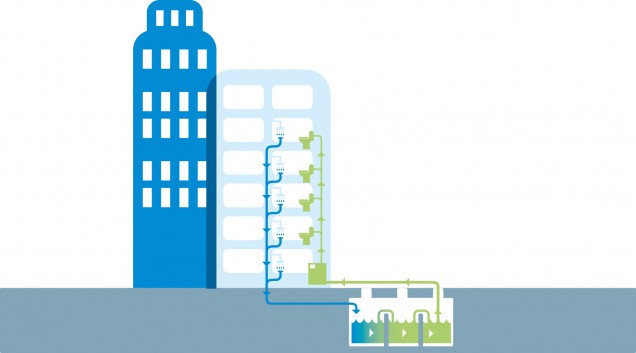
Greywater recycling captures the water used for showering or bathing and, after treatment through an ultra-filtration membrane system, is fed back into the property for non-potable purposes such as flushing toilets, irrigation and laundry.
- Greywater Recycling Batch System: where low energy consumption is a priority and there is physical space for a larger system footprint, this low pressure filtration method takes a little longer but uses less energy in the process.
- Greywater Recycling On-Demand System: where space saving and a faster return on investment are priorities, this high pressure approach delivers rapid ultrafiltration and therefore requires less tank storage and correspondingly reduced installation costs.
Rainwater Harvesting
Rainwater is collected, filtered and fed back into the property through a robust treatment system ensuring that only the cleanest water is utilised for non-potable purposes like vehicle washing, toilet flushing and irrigation. A rainwater harvesting system is suitable for all commercial applications where there is adequate roof space to harvest sufficient water to achieve a good return on investment.
Hoteliers interested in learning more about water risk can read our Global Water Risk Assessment and find tips for taking action on water reduction in our manual Environmental Management for Hotels.
ITP members are acting on water on behalf of the industry by collaborating with member hotel groups to develop the Hotel Water Measurement Initiative. This universally recognised tool and metric will help all hotels of any size, anywhere in the world measure in a consistent manner. The HWMI is currently in the testing phase and will be released as a free tool for the industry in World Water Week at the end of August 2016.
Source and acknowledgement: Green Hotelier.
The Park Inn by Radisson Blu Linz and its unusual guests
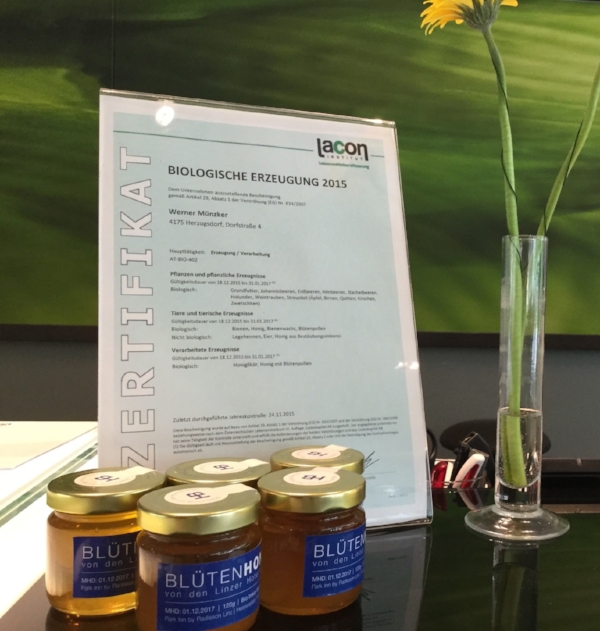
The Park Inn by Radisson Blu Linz invited some unusual guests to its hotel. Around 150,000 bees checked into the hotel's own beehives. Not only does this provide the hotel with delicious honey, but also contributes to the conservation of these highly useful animals.

In cooperation with the organic beekeeper Werner Münzker, four beehives were set up on the hotel's terrace on the first floor. The bee colony is overseen by Mr. Münzker and the "Stadtgärten Linz", the city's urban garden service enterprise. Guests are informed about the project and related safety precautions through an information sheet in each room. However, the environmental manager of the hotel has ascertained that no guest or employee has been stung so far. Furthermore, the hotel offers an educational trail with guided tours to its guests. The honey that is produced is available at the breakfast buffet and can also be purchased in the hotel.
Bees play a very important role both in agriculture and nature. A big share of our food production depends on the pollinating work of the bees. However, bees are in decline as they face many threats such as the loss of their natural habitats and the use of chemicals in agriculture. Initiatives such as the one of the Park Inn by Radisson Linz help the bees to survive even in highly developed urban environments.
A guide to green savings
Going green is still considered to be an expensive endeavour. However, when looking at the actual savings derived from sustainable practices, it turns out to be a real cost saver. Green Key compiled an overview of the most common energy, water and carbon dioxide saving practices in the travel and hospitality sector and their cost-effectiveness. You can see the whole factsheet here

Radisson Blu Alcron Hotel in Prague highly engaged in supporting socially disadvantaged youngsters and children
The Radisson Blu Alcron Hotel in Prague which has been awarded the Green Key since 2012 impresses with a project that benefits socially disadvantaged children and adolescents in the Czech Republic.

The hotel is working in close cooperation with an orphanage in the outskirts of the Czech capital by giving young people the chance to look behind the scene of the five-star hotel, with the prospect of getting an employment in their business afterwards. During the project, the adolescents get to know different activity areas in the hotel, and if they get curious about working in the hospitality sector there is the opportunity for them to undertake a training to become an employee.
Zuzana Varmuzova, Training Manager of the Radisson Blu Alcron Hotel and appointed Environmental Manager for the Green Key award says that their business started this project to support the local youth instead of donating to charity organisations in other countries. Although they would only help a small number of young people, Zuzana explains that for the individual youngster this initiative can be far more live changing than a financial donation to an external organisation.
Besides the project with the orphanage, the hotel organised a charity dinner in cooperation with the organisation "Dobry Andel" – Good Angel that helps families with kids that suffer from cancer. The dinner took place in the hotel’s own Michelin-starred restaurant ‘Alcron’. In Zuzana’s opinion, offering their guests indirect ways to financially contribute to a social project would be more effective than directly asking for money. “Today, people ask you for donations everywhere, we had the feeling that people are tired of being asked for money” she points out during the interview.
Another project that follows the same idea is the yearly ‘wish tree’, a Christmas tree set up in the hotel where guests can leave a present for the children in the orphanage. Like this, Zuzana says, the guests would know exactly where their money is going.
If you would like to learn more about the Radisson Blu Alcron Hotel please visit the hotel's website here
Five ways tech can make your hotel more responsible
Sustainability in hospitality is an increasingly important issue for today’s environmentally aware tourists. Managing Director of EPOSability Robbie Francis says employing eco-friendly technology is a great way to show guests that you’re committed to making a difference.

Switch to energy efficient lighting
The latest innovative technology solutions can work to increase energy efficiency, cut down on material waste and even increase profits for your hotel. Here are five ways that green technologies can help enhance your eco-friendly reputation and boost business for sustainable hotels.
- Eco-friendly heating and energy. Heating energy expenditure makes a big contribution to a hotel’s carbon footprint. From heating and hot water to air conditioning and refrigeration, keeping a constant comfortable temperature throughout the building can be a challenge. One way for sustainable hotels to help regulate their energy expenditure is to employ a building energy management system – a monitoring technology that gives you an overview of the energy consumed throughout your premises. According to British Gas, this can effortlessly reduce your energy consumption by up to 10%, while making significant cost savings, too.
- Waste reduction technology. According to WRAP, hotels and other hospitality businesses dispose of 600,000 tonnes of compostable food waste each year, in addition to pulpable and recyclable waste products such as paper and packaging. In many cases this is due to poor stock control, with excess items being bought in. The cost of buying food that isn’t needed, together with paying for waste disposal, means that technology that can help reduce this figure will also lead to a reduction in outlay for sustainable hotels. There are several ways to employ technology to minimise the amount of waste produced. Tracking and monitoring the items that are being thrown away using technology such as LeanPath will help make staff more aware of areas in which the most waste is being produced, leading to better and more informed decision making. Then, having reduced waste to a minimum, composting and pulping wherever possible will cut down its volume. Waste reduction tools can help to achieve this.
- Sustainable laundry. One of the pleasures of a hotel stay for many guests is the luxury of freshly laundered linen. But the energy used to wash sheets and towels is a significant contribution to most hotels’ carbon footprints. Many hotels now ask guests to consider the environment before requesting new towels each day, which has helped to cut down the amount of water and energy used. However, by using environmentally friendly laundry technology, there is more that can be done. Bead cleaning technology helps hotels to reduce their energy consumption and water usage, as well as cutting down on the frequency with which the linen needs to be replaced.
- Lighting technology. Most hotels have corridors and other public areas where the lights are often left on for long stretches of time without being used. Technologies like occupancy sensors are a cost-effective and simple way to ensure that lights are only switched on when they are needed – a very visible way to show your guests that energy efficiency matters to you. LED lighting is another consideration for reduced energy expenditure on lighting – although the practicality of LED lights in hotels does not always make this a feasible option.
- iPad POS systems. A new generation iPad POS system from a company like EPOSability has vast potential to make a tangible change to a hotel’s footprint. On a very simplistic level, the power usage alone makes a tangible difference, with an iPad till using 25 kW/h on average in comparison to a Windows-based system with on-site server that consumes 800 kW/h. That’s a 97% saving!
But when you begin to consider the additional benefits a cloud-based iPad POS system can have, the direct electrical saving becomes one of many far-reaching improvements:
- Going paperless. The combination of inbuilt email receipting for customers, combined with an online audit trail saved in the cloud, means the use of paper can be drastically reduced.
- Reduce engineering visits. With all the latest technology being almost entirely serviced and supported remotely, the necessity for on-site works is greatly diminished. Fewer call-outs mean less fuel used.
- Wastage tracking. Like the waste reduction technology above, an iPad POS can accurately track wastage to help hotels monitor their efficiency. Whether cooking a dish, pouring a drink or letting products go out of date, you can have clear visibility of exactly how much your staff are wasting. Measuring this, making changes and ultimately diminishing your excess waste will all make your hotel more sustainable as a business.
Using technology doesn't just mean computers back of house or modern check-in systems, technology can help create a more efficient kitchen, laundry, bar, housekeeping service or HVAC, it's always worth looking around to see what new systems on the market could help reduce your water, carbon, waste or energy consumption and help make your hotel that little bit more environmentally responsible.
Source and acknowledgement: Green Hotelier.
Local lunch at the Radisson Blu Hotel in Lucerne in Switzerland
Every Tuesday, the kitchen team of the LUCE Restaurant in the Green Key awarded Radisson Blu Hotel Lucerne indulges their guests with delicacies from the local market – and helps to protect the environment at the same time.

The concept of the project is fairly simple: Every Tuesday, the business lunch offered in the hotel’s restaurant only consists of products that were found on the local market. The head chef and his team themselves visit the market and choose the ingredients for the lunch.
This does not only challenge the creativity of the kitchen team, but is also a great initiative to protect the environment and support local businesses. By buying only local products instead of products that travelled a long way, carbon emissions that are usually generated during the transportation are reduced and the benefits for local farmers and producers increased.
Green Key at this year’s BEST EN Think Tank on Corporate Responsibility in Tourism
From 12-15 June 2016, Green Key International attended the sixteenth “Building Excellence in Sustainable Tourism Education Network” (BEST EN) Think Tank at the Eberswalde University for Sustainable Development, Berlin-Eberswalde in Germany.
The BEST Education Network is an international consortium of educators, students and professionals committed to the production and dissemination of knowledge and research in the field of sustainable tourism. At the yearly BEST EN Think Tank the network comes together to discuss the latest developments and research findings in sustainable tourism, and to find new ideas for research and educational materials.
This year’s BEST EN Think Tank XVI entitled “Corporate Responsibility in Tourism - Standards, Practices and Policies” presented a valuable opportunity for Green Key International to get an insight into the academic’s perspective on CSR in tourism, and to bring a practical viewpoint from an eco-label in tourism to the conference.
In the frame of break-out sessions topics such as consumer’s perception of sustainability, marketing of CSR in tourism as well as community engagement have been discussed.

Isabel Lissner, International Green Key Assistant, attending the conference said: “I think it was a very valuable and fruitful experience to attend the BEST EN Think Tank on behalf of Green Key International. Learning about the academics’ perspective on CSR in tourism and their research findings helps us to better understand the role eco-labels play in sustainable tourism, and which challenges they have to face. There is so much knowledge out there, but we rarely get the chance to benefit from it. The Think Tanks was therefore a good opportunity to bring praxis and theory together.”