Rethinking linen: from daily laundry to circular hospitality

Invisible to guests. Very visible in your footprint.

Every guest touches it. Every day, linen is washed, handled and reused. These everyday actions make linen one of the most influential yet often overlooked sustainability levers in hotel operations and a key building block of circular hospitality. Its impact reaches far beyond the laundry room, affecting water and energy use, chemical consumption, guest perception, and long‑term capital investment.

For this reason, Green Key International partners with organisations that deliver practical, measurable sustainability impact. One such partner is Diversey, supporting hotels in rethinking linen across its entire lifecycle from purchase and daily use to responsible end‑of‑life solutions.

The impact of cotton

A white hotel bedsheet may look neutral, yet its environmental impact begins long before it reaches a guest room. Cotton linen already carries a significant environmental footprint through cultivation, production and transport.  In a world facing climate pressure, water scarcity and droughts and rising resource constraints, this impact can no longer be ignored. Cotton production is water‑ and resource‑intensive, and many European tourism regions are already experiencing increasing water stress. Premature linen replacement therefore goes beyond cost. It means more cotton grown, more water and energy consumed, more chemicals used, and more waste created turning linen management into both a sustainability and climate issue.

Why establishments should rethink linen

Every establishment already has a linen lifecycle, one that starts long before it reaches a guest room and continues long after it leaves service. From cotton cultivation to daily use and eventual replacement. When managed intentionally, this lifecycle becomes circular reducing the need for virgin materials, extending use, and creating value beyond first life.    By extending linen lifetime, through investment in high-quality linen and proper laundry care, hotels can directly reduce demand for new cotton, lowering the environmental impact in cultivation and production while mitigating pressure in the use phase.

Linen replacement alone1one‑third of total laundry operating costs2, making it the second‑largest cost driver after labour. Despite this, linen is still often treated as a commodity rather than a strategic asset.

Replacement cycles of 12 to 24 months are widely accepted, rarely questioned, and often driven by habit rather than a deliberate lifecycle strategy.

Once linen enters daily operations, most hotels operate a three‑par stock, rotating continuously between guest rooms, laundry and storage. This model is standard, but it is also where hotels have the greatest influence. How linen is washed, handled and managed directly affects resource consumption, textile wear and replacement frequency. Without active management, continuous rotation increases water, energy and chemical use, accelerates wear and amplifies both costs and environmental footprint.

The missed opportunity: linen as a strategic lever

What if linen management became a strategic lever instead of an operational afterthought? Linen is one of the few hotel assets where financial performance, environmental impact, and daily operations come together so directly.

By rethinking how linen is purchased, used, cared for and replaced, hotels can reduce costs and improve sustainability performance without compromising guest comfort. A lifecycle‑based approach turns ambition into action without adding complexity.

This is not about changing the guest experience, but about operational leadership and long‑term value creation.

Linen as a lifecycle system

True sustainability in hospitality is shaped not by single initiatives, but by how everyday operations are designed and managed. Linen is a clear example. When treated as a lifecycle system rather than a consumable product, linen becomes a circular asset reducing environmental impact, improving operational efficiency, guest experience and creating shared value beyond first use. By focusing on durable textile selection, optimised laundry operations and responsible end‑of‑life solutions, Diversey helps establishments reduce water, energy and chemical consumption, extend linen lifetime and minimise waste.

Through Linen Consulting, hotels receive expert guidance to balance comfort, durability and sustainability. A lifecycle‑based approach can extend linen lifetime by 30% or more, while significantly reducing replacement costs and capital investment.

Optimised low‑ or cold washing laundry programs reduce wear, water & energy use, lower operational costs and protect both textiles and people.

Efficiency is essential but it is not enough. With IntelliLinen, hotels gain real‑time insight into laundry performance through intelligent dispensing and remote monitoring, enabling consistent quality and informed decision‑making.

Responsibility also extends beyond use, closing the loop through circular end‑of‑life solutions. Through Linens For Life, active since 2011, discarded hotel linen is given a second life, creating dignified work and income for women from vulnerable communities across Europe and beyond.

Each year, a typical 400-room hotel generates 2.000 to 3.000 kg of used linens bedsheets, pillowcases, towels, tablecloths, uniforms, and more. Discarded linens can provide economic opportunities for those in need.

Shaping responsible hospitality together

Hoteliers shape more than guest experiences. They shape supply chains, communities and what responsible business looks like. Together with Green Key International, Diversey helps hotels turn sustainability ambition into practical, measurable action. Because the future of hospitality is shaped not by one big decision, but by hundreds of small ones made every day.

Want to discover how your hotel can reduce water use, extend linen life and support circular economy goals? Download the whitepaper “Why every hotel should rethink linen” and learn how everyday operational choices create measurable sustainability impact via this link.

Unlocking Sustainable Hospitality in New Zealand

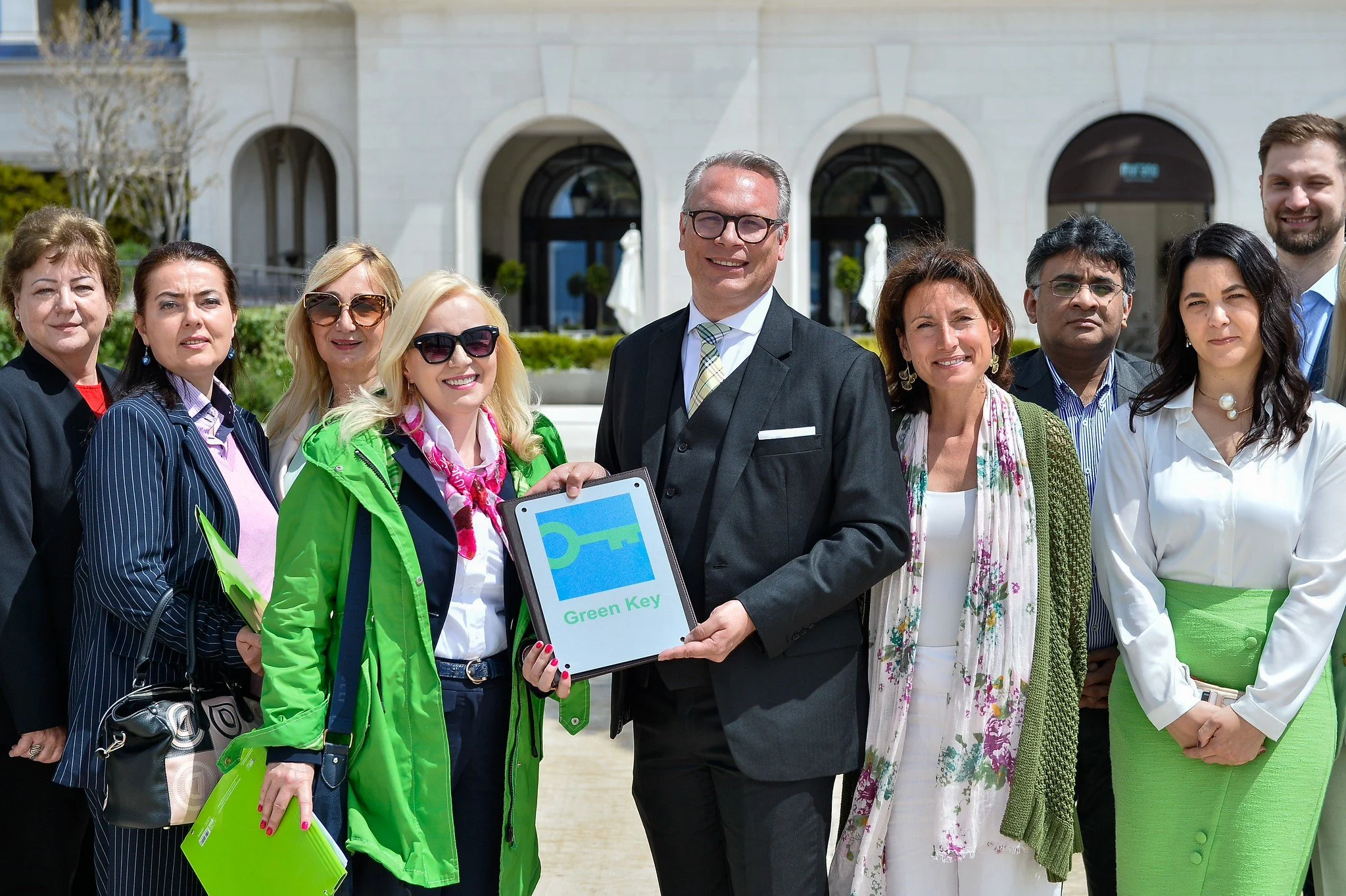
Green Key is pleased to announce that voco Auckland City Centre, Holiday Inn Express Auckland City Centre, and Holiday Inn Express & Suites Queenstown have become the first establishments in New Zealand to achieve Green Key certification. The certification was awarded following a comprehensive auditing and documentation process, confirming the hotels’ compliance with Green Key’s rigorous environmental and social responsibility criteria.   

“Green Key certification reflects the practical, handson work our hotel teams do every day. Across the three hotels based in Auckland and Queenstown, our teams introduced initiatives that reduce waste, strengthen local partnerships and engage the surrounding community, from repurposing food and coffee grounds through local partners to supporting urban biodiversity with our rooftop beehives.” says Jason Sabin, from EVT Connect Hospitality New Zealand. 

Across the certified hotels, teams have demonstrated strong environmental commitment with a series of circular economy initiatives. Stale bread is sent to a food rescue partner to be milled into flour and returned to the hotel for use in-house, while used coffee grounds are collected by a local family-run business and repurposed into artisan soap for VIP guest amenities. Additional coffee grounds are also made available to neighbouring office workers for home composting. 

Food approaching the end of its shelf life is listed on the FoodPrint app at discounted prices, enabling local community members to purchase and collect meals directly from the hotel, helping to reduce food waste while improving access to affordable food. Two rooftop beehives also produce honey served at breakfast and used in guest amenities, while reducing food miles. 

These actions show how sustainability comes to life in hotel operations when teams are empowered to make thoughtful, on‑the‑ground decisions that benefit guests and the communities they operate in. 

Alongside environmental initiatives, the hotels invest in social impact through the RISE - Reaching for Inclusion through Scholarships & Experiences program established by Pro-invest Group. The program provides equity-based scholarships, mentoring, and work experience opportunities for individuals facing socio-economic barriers to entering the hospitality sector. RISE supports aspiring hospitality professionals to gain practical experience while building confidence and career readiness. 


The certifications of these three hotels were possible thanks to Pro-invest Group, whose ambitious sustainability goal set under its One Earth, Countless Experiences strategy was established in 2022 to ensure all 15 Pro-invest Group fund hotels across Australia and New Zealand achieved third-party sustainability certification. The Group has successfully delivered on this commitment, with the New Zealand hotels marking a first for the country under the Green Key program. 


About Pro-invest Group  

Pro-invest Group is an integrated real estate investment platform specialising in private equity real estate, fund and asset management across Asia Pacific, Europe and the Middle East. Established in 2010, the Group manages approximately A$3 billion in assets under management and manages the full asset lifecycle, with a portfolio spanning over 25 hotels (around 6,000 rooms) alongside commercial and mixed‑use assets. Building on its hospitality heritage and operational expertise, Pro‑invest Group is evolving into Flex‑Living, Build‑to‑Rent and Commercial real estate. The Group has a commitment to ESG backed by its One Earth, Countless Experiences ethos. For more information visit www.proinvestgroup.com 

About EVT Connect Hospitality  

Global brand, local powerhouse. EVT Connect Hospitality is a third-party management offering leveraging EVT’s local and extensive expertise to provide best in class insights and drive performance for the brand. From local talent development and operations, to driving market leading revenue strategies for third-party loyalty programs, distribution and brand standards. EVT Connect Hospitality is for owners that demand a global brand, paired with local expertise, flexible management and service solutions to maximise their asset’s success. For more information head to connecthospitality.com  

From plate to purpose: how the Green Recipe is changing the way we cook and who we cook for

A Catalan initiative by Fundació Coma de Meià shows what happens when hospitality gets serious about waste and about people

What if a single dish could tell the whole story of a product with nothing left behind? That question is at the heart of the Green Recipe, a methodology born out of a genuine need in the restaurant sector and one that is already proving its worth in kitchens across Catalonia. 

The premise is simple but demanding: design every menu and every à la carte dish around 100% use of each ingredient. No offcuts quietly discarded. No vegetable peel thrown away. Every part of every product finds a purpose on the plate. 

Rooted in the land, driven by a mission 

The Green Recipe was created by Fundació Coma de Meià, a foundation nestled in the heart of the Vall de Meià in Catalonia. Their mission reaches across ecology, agriculture and culture at once: to preserve and share the eco-agro-cultural and gastronomic heritage of their territory while driving sustainability and rural development. They build bridges between nature, gastronomy and Catalan culture and, with this project, they have built one of the most compelling bridges yet. 

This project did not emerge from a boardroom. It arose from what restaurateurs were already living: the daily reality of food waste, rising costs and growing pressure to operate more responsibly. With funding from the Government of Catalonia and a network of committed partners, a dedicated team spent a full year working side by side with restaurants to develop, test and refine the methodology. 

The results speak clearly. Across the establishments involved, food waste dropped by 30%, meaning that ultimately only what was truly unusable was discarded. Beyond the environmental impact, that reduction translated directly into a 25% decrease in food-related costs, with a measurable effect on the bottom line. 

Six restaurants, one shared commitment 

The project united six restaurants, ranging from the world-renowned El Celler de Can Roca to the Fundació Coma de Meià itself, all committed to the same cause. A practical guide was developed and rolled out across different types of establishments and food businesses, proving that the Green Recipe is not a concept reserved for fine dining. It works wherever people cook with intention. 

The initiative also reached further: training was delivered to the network of cooks from the agricultural schools of Catalonia, planting seeds for a generation of professionals who will enter the industry with sustainability already built into their practice. 

Cooking as a social act 

The Green Recipe goes beyond the kitchen. A training restaurant was established as part of the project, one that has already provided meaningful work and real futures to two students at risk of social exclusion. Awareness-raising sessions on organic farming and its consumption rounded out an initiative that connects the food on your plate to the land it came from and the community it feeds. 

Changing minds, one conversation at a time 

Was it all straightforward? Not entirely. A handful of restaurateurs were initially hesitant, a natural reaction when asked to rethink processes that have long felt fixed. But the response from diners was immediate and warm. Guests did not just accept the new approach; they embraced it. And for those who needed more convincing, a calm and honest conversation about the project's purpose was enough to bring them on board. 

The Green Recipe is not a pilot programme or a one-off experiment. It is a transferable, scalable methodology with proven results, ready to travel to any kitchen willing to ask the same question: what if we used all of it? 

Watch the story 

Is your restaurant ready to take the next step? 

Green Key certified restaurants are already leading the way on sustainability. The Green Recipe shows just how far that leadership can go: less waste, lower costs, stronger community ties and a story your guests will want to hear. If you are a Green Key certified establishment, you have everything you need to bring this kind of thinking into your kitchen. What will your version of the Green Recipe look like? 

Share your own sustainability story with us at Green Key International and inspire the hospitality community worldwide. 

Global Action Days 

This is what Global Action Days 2026 is all about: turning practical solutions into shared momentum. Initiatives like the Green Recipe show how sustainability can be embedded into everyday operations, delivering tangible environmental, economic, and social impact. As part of Global Action Days, we invite Green Key establishments and partners to take inspiration from this approach, whether by reducing food waste, rethinking resource use or engaging staff and guests in more responsible practices. Small, practical actions, taken together, are what drive meaningful change across our

Behind the scenes of the Green Key certification: Q&A with Terme Catez Hotel in Slovenia

Have you ever wondered what it is like to be a Green Key certified hotel?  

Green Key International has interviewed Alenka Mokrovič Pogačar, the Sales and Marketing Director at Terme Čatež Hotel, in Slovenia. Known for its summer and winter thermal facilities, the resort has long been engaged in environmental initiatives and resource management, from geothermal energy use to guest awareness programs. Through this interview, Alenka addresses topics like the motivations, challenges, and concrete actions behind the Green Key certification, both during the certification process and its results with guests. 


Why did you apply for the Green Key certification? 

At Terme Čatež, we have been implementing various environmental and sustainability measures for many years. Our main motivation was to further strengthen our commitment to sustainable development and responsible management of natural resources. The Green Key certification also represents international recognition of our efforts and sends an important message to our guests that we actively care for the environment.  


How did the Green Key certification process go in your experience? 

The certification process was well structured and transparent. It included a review of our existing practices, preparation of documentation, and verification that all required criteria were met. The process also helped us systematically review our environmental activities and identify new opportunities for improvement. 


What is one good practice that you implemented and that you are proud of?  

A significant part of our energy is obtained from a geothermal source, which represents a renewable and environmentally friendly energy source. This significantly reduces emissions and environmental impact while supporting the principles of sustainable development. For many years, we have used the energy from thermal water springs to heat part of our accommodation infrastructure as well as sports facilities. 


How do the clients react to the certification?  

Guests often notice the certificate, as information about its implementation is visible in all facilities and accommodation units. They perceive it as a sign of quality and a responsible attitude toward the environment. We believe this provides an additional level of trust in our hotel. Occasionally, guests ask additional questions about our sustainability practices, and many express support for such initiatives, often through small everyday actions such as reusing towels. 


Why did you choose Green Key Certification among the ecological tourism certifications? 

Green Key is one of the leading international environmental certificates for tourism facilities and is recognized in many countries. Its criteria are clearly defined, professionally designed, and focused on continuous improvement of environmental practices. Because of its international recognition and credibility, we assessed that Green Key is a suitable certification for our company. 


What would you say to hotels which want to apply for the Green Key certification? 

To those who are still considering whether to apply, we would like to emphasize that the Green Key certificate is an excellent opportunity to improve sustainable management and strengthen guests’ trust. 

The process encourages organizations to systematically introduce environmental measures and brings long-term benefits both for the environment and for business operations. 

The Green Key certification also increases visibility on the international tourism market. Sustainability, green tourism, and environmental responsibility provide guests with additional confidence when choosing a destination. 


A greener horizon: Azerbaijan welcomes its first Green Key certified hotels 

Green Key’s global mission for sustainable tourism has now reached Azerbaijan! For the first time since EkoSfera became our National Operator in Azerbaijan, three hotels in Baku have achieved Green Key certification: Four Seasons Hotel Baku, Ibis Baku City Hotel and JW Mariott Absheron Baku. The certification rewards strong environmental commitment, confirmed by the hotels’ compliance with Green Key’s rigorous environmental and social responsibility criteria. 

Waste Management and Staff Training actions 

Both Ibis Baku City Hotel and Four Seasons Hotel Baku have taken meaningful steps toward a more environmentally responsible guest experience. Through its training program on “Energy Saving and Food Waste Reduction”, Ibis Baku City Hotel empowers its employees to reduce energy consumption while ensuring compliance with Green Key standards. Similarly, Four Seasons Hotel Baku engages every staff member in sustainable actions through color-coded bins and a monthly “No Bin Day”. 


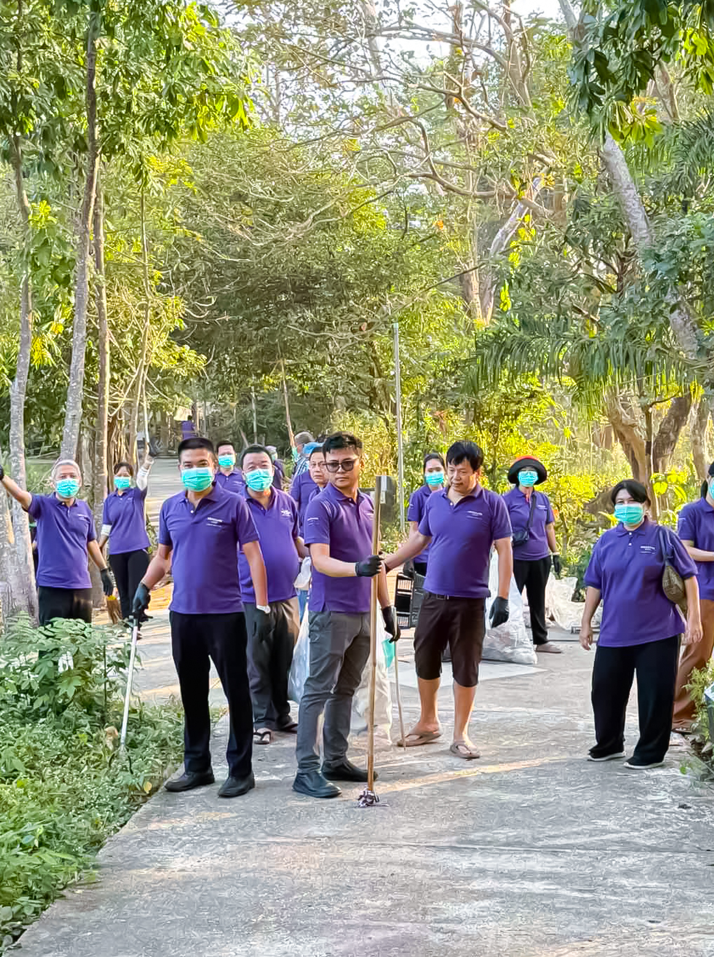
The staff at Ibis organized a cleanup of the seaside, removing plastic and other waste.

Taking care of the local environment 

JW Mariott Absheron Baku and Ibis Baku City Hotel have also taken initiatives proving that their environmental commitment is not confined to their establishments but is expanding to their local community. Both hotels participated in cleanup activities like the ones organised during Earth Day. 

Innovation in Sustainable Practices 

Over the past months, every hotel has also developed its own innovative practices to reduce ecological footprints. At the Four Seasons Hotel this includes circular economy practices where food waste is repurposed for animal feed or fertiliser. Ibis Baku City Hotel has focused its efforts on energy savings, encouraging each department to analyse how small daily actions could lead to impactful changes in the long term. 

JW Marriott Absheron Baku

JW Marriott Absheron Baku stated “We are delighted to be recognised by Green Key International and look forward to continuing our journey toward a more sustainable future”. 

Thanks to EkoSfera, these first certified hotels set an important benchmark for sustainable tourism in the country and demonstrate how high hospitality standards and ambitious environmental commitment can go hand-in-hand.  

Green Key in Fiji: Announcement of first establishments in the South Pacific archipelago

Green Key is pleased to announce that OUTRIGGER Fiji Beach Resort and Castaway Island, Fiji have become the first establishments in Fiji to achieve Green Key certification. The certification was awarded following a comprehensive auditing and documentation process, confirming the resorts’ compliance with Green Key’s rigorous environmental and social responsibility criteria. 

Both properties demonstrate strong environmental management systems and a long-term commitment to sustainability. They implement measures to reduce energy and water consumption, manage waste responsibly, and prioritise sustainable purchasing. At OUTRIGGER Fiji Beach Resort, a dedicated environmental officer oversees legislative compliance and supports continuous improvement across all operational areas. 

The resorts place a strong emphasis on community engagement and local economic support through local employment and sourcing practices. Environmental education is integrated into the guest experience, encouraging awareness of sustainability and conservation issues. 

Marine conservation is a key focus at Castaway Island, Fiji, where the recently launched Sculptural Coral Gene Bank supports coral regeneration while providing an educational platform for guests to learn about reef protection and biodiversity. 

As the first Green Key certified establishments in Fiji, OUTRIGGER Fiji Beach Resort and Castaway Island, Fiji set an important benchmark for sustainable tourism in the destination and demonstrate how high-quality hospitality can align with strong environmental and social practices. 

ABOUT OUTRIGGER RESORTS & HOTELS 

For more than 75 years, OUTRIGGER has charted a journey of discovery – expanding from Hawaii to premier resort destinations including Fiji, Mauritius, Thailand and the Maldives. The privately held hospitality company invites guests to ‘Come Be Here’ with authentic Signature Experiences and the  OUTRIGGER DISCOVERY loyalty program – a member of the award-winning Global Hotel Alliance (GHA). OUTRIGGER’s multi-branded portfolio includes OUTRIGGER Resorts, Hawaii Vacation Condos by OUTRIGGER®, The Kapalua Villas Maui and OUTRIGGER Honua Kai Resort & Spa while also managing select properties from top international hotel brands including Embassy Suites by Hilton®. Find out more at  OUTRIGGER.com  or visit @OUTRIGGERResorts on Facebook, Instagram and  X


About Green Key 


Green Key is a leading international environmental certification programme for tourism and hospitality businesses, operated by the Foundation for Environmental Education (FEE). The certification is awarded to establishments that meet strict environmental standards across areas such as energy and water conservation, waste management, sustainable sourcing, environmental education, and corporate social responsibility. Recognised worldwide, Green Key provides travelers with trusted assurance that certified hotels and resorts are actively reducing their environmental impact while contributing positively to the destinations in which they operate.  

Dieci Boutique Restaurant: A Culinary Event and a Model of Sustainability

Nestled in the Bulgarian countryside, Dieci Boutique Restaurant offers more than fine dining, it’s a celebration of culinary artistry, local flavours, and sustainable practices. Recognised as the only Michelin-star restaurant experience in Bulgaria, Dieci is led by the dynamic duo Chef Gianfranco Chiarini and Restaurant Director/Sommelier Anna Chiarini, who together create an unforgettable experience for the ten exclusive guests served each evening. 

Certified under the Green Key Programme, Dieci demonstrates that luxury and sustainability can go hand in hand. The Green Key programme recognises establishments worldwide that meet rigorous environmental and ethical standards. Following a thorough on-site audit, Dieci has implemented a series of innovative measures that set a benchmark for the hospitality industry. 

Innovative Sustainable Practices at Dieci 

Plastic Reuse

Following Green Key certification, the team at Dieci decided to take a more in-depth approach to plastic reduction and recycling. All food-grade plastics are melted and formed into bricks, which are planned to construct a new recycling facility. Going further, they have transformed the plastic into 1.7 mm 3D printer filaments, which are then used to create uniquely designed plates for serving small bites. This approach not only reduces waste but also encourages meaningful conversations with guests about reducing, reusing, and recycling plastics. 

Wood Renewal and Reuse

Dieci has renovated its tables using naturally fallen cherry trees, regenerating the wood for sustainable use. Metal “bow ties,” made from recycled metal melted on-site, prevent further cracking while demonstrating innovative reuse of materials. The leftover wood is repurposed into small serving structures, and by 2026, the restaurant plans to produce its own pellets for heating using reclaimed wood from fallen branches and trees. This initiative clears hazardous forest waste while providing an ethical and environmentally sound heating solution. 

Flooring and Decor

Sustainability extends to the restaurant’s interior, where custom-made hemp carpets replace traditional flooring, and hemp insulation is used throughout the new Food Lab. These choices reflect a holistic approach to eco-friendly materials in every aspect of the restaurant. 

 Why These Practices Matter 

The sustainable measures at Dieci are not only environmentally responsible, they are also an integral part of the guest experience. Reviews frequently compare Dieci to renowned Michelin-starred restaurants worldwide, with some guests noting that their experience at Dieci surpasses even the most famous establishments. The restaurant’s seasonal tasting menu, based on the “From Farm to Table” philosophy, uses 98% local ingredients and integrates recycling of all food waste, highlighting a strong commitment to sustainability at every level. 

By combining exceptional cuisine, personalised service, and pioneering environmental practices, Dieci creates a dining experience that is both unforgettable and socially responsible. 

Remarkable Results

  • Zero waste thrown or delivered 

  • Guests actively engaged in discussions on sustainability 

  • Recognition as the most sustainable restaurant in Bulgaria and Eastern Europe for 2025 by Green Key 

Dieci Boutique Restaurant is a prime example of how restaurants can harmonise gastronomy and environmental stewardship, inspiring both industry peers and guests alike. 

Green Key ‘s major developments in 2025

Green Key International marked a year of significant progress in 2025, reporting robust global growth, strengthened partnerships, and major advances in its sustainability framework. 

The certification programme expanded by more than 25 percent during the year, growing from approximately 6,500 certified establishments in late 2024 to over 8,300 locations across 90 countries. This growth reflects increasing demand from the tourism industry for credible and internationally recognised sustainability certification. 

To support new applicants, Green Key hosted numerous introductory webinars throughout 2025, with plans to extend tailored support to re-applicant establishments in 2026. 


Green Key establishments - as of July 2025

Collaboration with major industry partners remained a key driver of growth. Green Key continued cooperation with several international hotel chains, renewed its long-standing partnership with Accor, and signed a new agreement with The Shilla Hotels & Resorts. Additional hotel chain partnerships are expected to be finalised soon. On the tour operator side, new partnerships were established with Sunweb Group and Corendon, while cooperation continued with Jet2holidays and was renewed with Aurinkomatkat. 

In 2025, Green Key also became an active member of the newly established Tourism Sustainability Certifications Alliance (TSCA). Through this alliance, Green Key is working alongside other leading certification programmes to develop joint minimum standards and address shared challenges, contributing to greater alignment and credibility across sustainability certifications. 

A major focus of the year was the revision of Green Key’s criteria. The updated criteria, developed through internal working groups, external expert input, and public consultation, are expected to take effect on 1 October 2026. They aim to reflect current sustainability expectations and align with ISO principles. The revised criteria and explanatory notes will be published in early 2026. 

In parallel, Green Key is redesigning its certification process, with implementation also planned for October 2026. The updated system will harmonise procedures across countries, align with ISO requirements, and clearly define responsibilities among applicants, Green Key, third-party auditors, and certification bodies. 

These updates are designed to ensure readiness for the EU’s Empowering Consumers for the Green Transition Directive, which will take effect in late 2026. Green Key plans to apply for scheme approval with the Danish National Accreditation Body, while the Foundation for Environmental Education will seek accreditation of its certification body in 2026. 

Green Key’s visibility continued to increase in 2025, with 165,000 unique website visitors, more than 14,000 social media followers, and over 8,900 newsletter subscribers. 

Looking ahead to 2026, Green Key plans to publish its new criteria and certification processes, support establishments through the transition, deepen cooperation with partners, and continue expanding its global network in support of responsible and sustainable tourism. 


News from our partners: Rethinking Plastic Waste with Diversey

From Guest Experience to Lasting Impact

Across the hospitality industry, plastic pollution has become one of the biggest sustainability challenges, and hotels are on the frontline. Hotels, being hubs of comfort and service, are also at the forefront of this issue. From single-use toiletry bottles and disposable packaging to the less visible plastic waste guests bring in, such as water bottles, takeaway containers, or shopping bags. 


What seems small in a single room becomes massive when scaled across an entire property or hotel group 365 days a year. Hoteliers need solutions that reduce plastic waste without compromising service or guest satisfaction. 

Green Key International partners with organizations that share its mission of measurable, practical impact. One such partner, Diversey, has taken major steps to rethink how cleaning and hygiene products can reduce plastic waste while maintaining high standards of safety, cleanliness, and guest experience. Together, Green Key & Diversey can accelerate impact and close the gap between intention and implementation because progress requires innovation, collaboration, and knowledge sharing. 


Redefining Clean: From Hygiene to Responsibility 

Sustainability trends are reshaping how cleaning and hygiene are defined in hospitality. Hotels are no longer judged only by how clean they are, but by how responsibly they clean. 

Today’s new standards in hospitality include plastic minimisation, responsible packaging, and the ambition to become plastic neutral. Yet too many cleaning products are still packaged in virgin plastic that is difficult to recycle and nearly impossible to dispose of responsibly. 


Reduce, Reuse, Recycle, Rethink 

Diversey approaches plastic reduction through four guiding principles Reduce, Reuse, Recycle, and Rethink, turning plastic packaging from a waste challenge into measurable ESG impact. 


Optimised for Recycling 

Too many plastic items in hotels, including cleaning product packaging available on the market are still made of virgin plastic and are difficult to recycle, making proper disposal a challenge.  

To lead the shift to a circular economy, Diversey is reducing virgin plastic use, innovating sustainable packaging, and integrating recycled materials. By the end of 2025, all 5L canisters will have transitioned to Post-Consumer Recycled (PCR) plastic, cutting virgin plastic while maintaining durability, safety, and performance.  

Redesigned Housekeeping Range 

Diversey redesigned also its Room Care SafePack® pouches into fully recyclable, mono-material packaging that empties completely, leaving no residue and supporting circularity in regions with advanced recycling infrastructure such as Europe By moving away from virgin plastic to fully recyclable pouches, Diversey not only reduces its own environmental footprint but also helps hotels reduce theirs. 


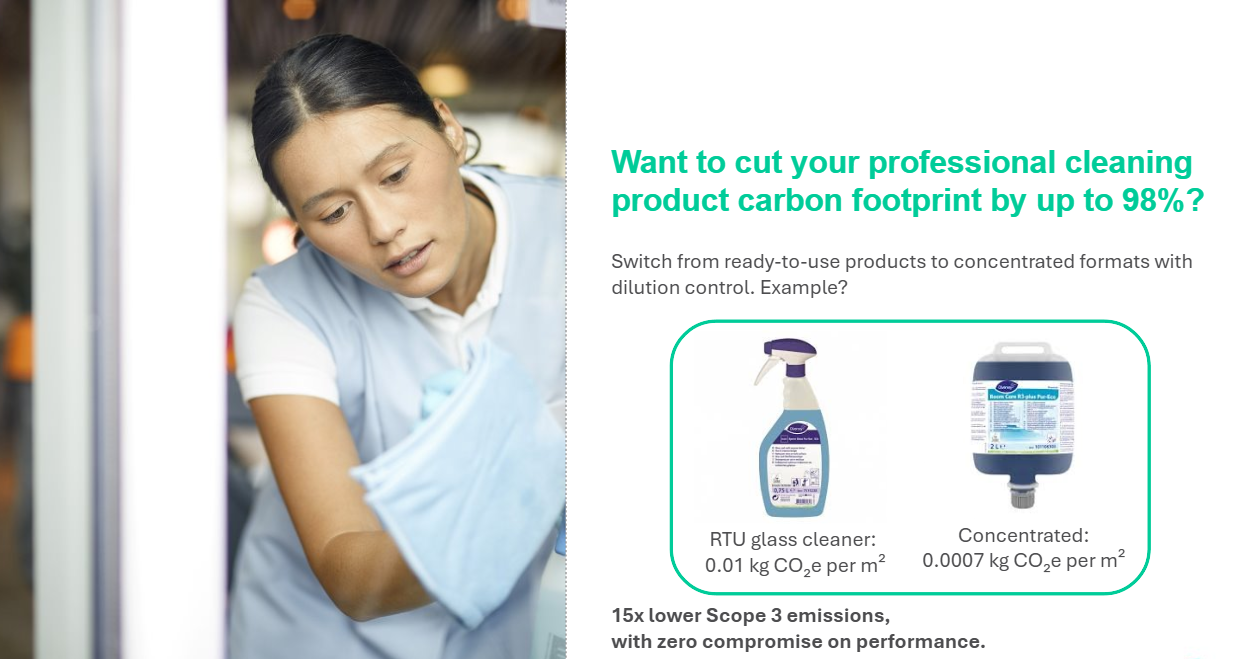
With Room Care Plus Pur-Eco, over 75% of daily room cleaning products now carry the EU Ecolabel. Using concentrated formulations and closed dosing systems, hotels can cut packaging waste by up to 98% compared to ready-to-use bottles. Less plastic waste, lower CO₂ emissions, and consistent performance without compromising hygiene or guest satisfaction. 

Plastic-Free Personal Care 

Guest amenities and handsoap often generate large amounts of unnoticed plastic waste. To address this hidden plastic waste stream, Diversey introduced LESSEAU®, a plastic-free hand hygiene solution made from 99% natural ingredients. Each solid soap bar replaces up to seven 1-liter plastic liquid handwash bottles, reducing both plastic and transport emissions. 

Used with a refillable dispenser that turns the bar into rich lather, hotels can maintain the same level of hygiene and guest experience without the use of plastic. Scaling innovations like this across thousands of rooms creates measurable progress toward circular hospitality, where every refill, reuse, and redesign counts. 

Take Back and Upcycling Where Needed Most 

In many parts of the world, recycling infrastructure is still limited. When there is no suitable recycling facility available for hotels, plastic waste must be treated as residual waste and incinerated the least sustainable option in the waste hierarchy, as it does not contribute to circularity. But every bottle or container discarded is a lost opportunity for circular progress.  

To change that, Diversey partnered with Corsair in Thailand to launch a plastic take-back initiative for hotels. Collected waste is diverted from the environment and converted into valuable materials such as Sustainable Aviation Fuel (SAF): reducing leakage, creating local jobs, and supporting circular progress and enabling hotels to make a tangible contribution to a cleaner future. 

Beyond Thailand, we expanded our PlasticShredssm programme, an upcycling initiative. The program transforms used plastic waste into durable materials for infrastructures replacing gravel in village roads, pavements, and even sports courts

By turning plastic waste into something that strengthens communities, Diversey closes the loop on materials that once caused harm. This is circular hospitality in action combining environmental responsibility with social impact, where every piece of plastic recovered builds both resilience and regeneration. For more information about PlasticShredsSM  or other CSV- programmes, click here. 

  Diversey reimagined its cleaning solutions to simplify recycling, eliminate plastic where possible, and give waste new purpose where recycling falls short. Because small design changes can spark big change helping hospitality turn sustainability goals into lasting impact for the environment, guests, and local communities. 

Disclaimer 

This article includes sustainability-related claims based on internal testing, customer case studies, and verified product specifications. All environmental data reflects available figures at the time of publication and assumes typical hotel usage scenarios. Claims regarding recyclability, CO₂ savings, and plastic reductions are based on current market conditions in the regions specified. For full methodology, verification data, or certificate references, please contact Solenis.