Latest News

Green Key ‘s major developments in 2025

Green Key International marked a year of significant progress in 2025, reporting robust global growth, strengthened partnerships, and major advances in its sustainability framework. 

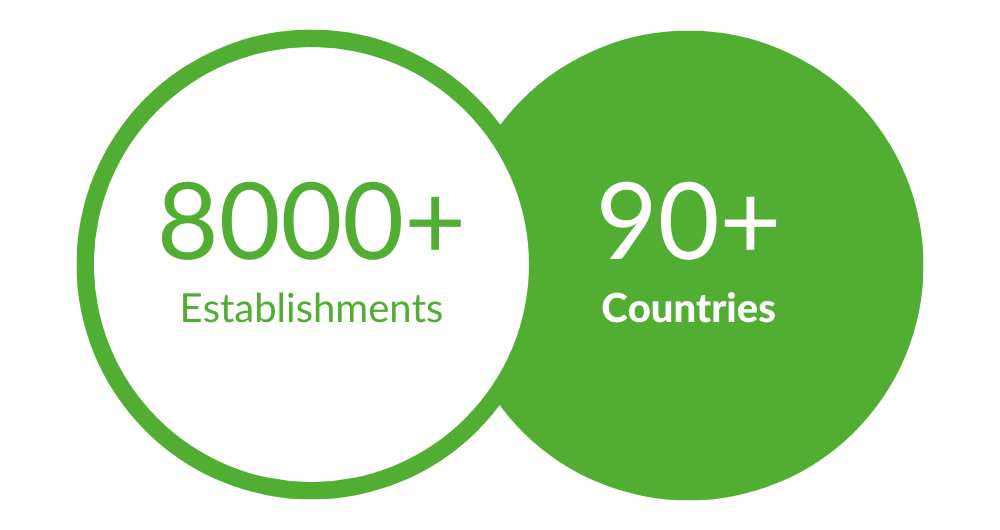
The certification programme expanded by more than 25 percent during the year, growing from approximately 6,500 certified establishments in late 2024 to over 8,300 locations across 90 countries. This growth reflects increasing demand from the tourism industry for credible and internationally recognised sustainability certification. 

To support new applicants, Green Key hosted numerous introductory webinars throughout 2025, with plans to extend tailored support to re-applicant establishments in 2026. 


Green Key establishments - as of July 2025

Collaboration with major industry partners remained a key driver of growth. Green Key continued cooperation with several international hotel chains, renewed its long-standing partnership with Accor, and signed a new agreement with The Shilla Hotels & Resorts. Additional hotel chain partnerships are expected to be finalised soon. On the tour operator side, new partnerships were established with Sunweb Group and Corendon, while cooperation continued with Jet2holidays and was renewed with Aurinkomatkat. 

In 2025, Green Key also became an active member of the newly established Tourism Sustainability Certifications Alliance (TSCA). Through this alliance, Green Key is working alongside other leading certification programmes to develop joint minimum standards and address shared challenges, contributing to greater alignment and credibility across sustainability certifications. 

A major focus of the year was the revision of Green Key’s criteria. The updated criteria, developed through internal working groups, external expert input, and public consultation, are expected to take effect on 1 October 2026. They aim to reflect current sustainability expectations and align with ISO principles. The revised criteria and explanatory notes will be published in early 2026. 

In parallel, Green Key is redesigning its certification process, with implementation also planned for October 2026. The updated system will harmonise procedures across countries, align with ISO requirements, and clearly define responsibilities among applicants, Green Key, third-party auditors, and certification bodies. 

These updates are designed to ensure readiness for the EU’s Empowering Consumers for the Green Transition Directive, which will take effect in late 2026. Green Key plans to apply for scheme approval with the Danish National Accreditation Body, while the Foundation for Environmental Education will seek accreditation of its certification body in 2026. 

Green Key’s visibility continued to increase in 2025, with 165,000 unique website visitors, more than 14,000 social media followers, and over 8,900 newsletter subscribers. 

Looking ahead to 2026, Green Key plans to publish its new criteria and certification processes, support establishments through the transition, deepen cooperation with partners, and continue expanding its global network in support of responsible and sustainable tourism. 


News from our partners: Rethinking Plastic Waste with Diversey

From Guest Experience to Lasting Impact

Across the hospitality industry, plastic pollution has become one of the biggest sustainability challenges, and hotels are on the frontline. Hotels, being hubs of comfort and service, are also at the forefront of this issue. From single-use toiletry bottles and disposable packaging to the less visible plastic waste guests bring in, such as water bottles, takeaway containers, or shopping bags. 


What seems small in a single room becomes massive when scaled across an entire property or hotel group 365 days a year. Hoteliers need solutions that reduce plastic waste without compromising service or guest satisfaction. 

Green Key International partners with organizations that share its mission of measurable, practical impact. One such partner, Diversey, has taken major steps to rethink how cleaning and hygiene products can reduce plastic waste while maintaining high standards of safety, cleanliness, and guest experience. Together, Green Key & Diversey can accelerate impact and close the gap between intention and implementation because progress requires innovation, collaboration, and knowledge sharing. 
  

Redefining Clean: From Hygiene to Responsibility 

Sustainability trends are reshaping how cleaning and hygiene are defined in hospitality. Hotels are no longer judged only by how clean they are, but by how responsibly they clean. 

Today’s new standards in hospitality include plastic minimisation, responsible packaging, and the ambition to become plastic neutral. Yet too many cleaning products are still packaged in virgin plastic that is difficult to recycle and nearly impossible to dispose of responsibly. 


Reduce, Reuse, Recycle, Rethink 

Diversey approaches plastic reduction through four guiding principles Reduce, Reuse, Recycle, and Rethink, turning plastic packaging from a waste challenge into measurable ESG impact. 


Optimised for Recycling 

Too many plastic items in hotels, including cleaning product packaging available on the market are still made of virgin plastic and are difficult to recycle, making proper disposal a challenge.  

To lead the shift to a circular economy, Diversey is reducing virgin plastic use, innovating sustainable packaging, and integrating recycled materials. By the end of 2025, all 5L canisters will have transitioned to Post-Consumer Recycled (PCR) plastic, cutting virgin plastic while maintaining durability, safety, and performance.  

Redesigned Housekeeping Range 

Diversey redesigned also its Room Care SafePack® pouches into fully recyclable, mono-material packaging that empties completely, leaving no residue and supporting circularity in regions with advanced recycling infrastructure such as Europe By moving away from virgin plastic to fully recyclable pouches, Diversey not only reduces its own environmental footprint but also helps hotels reduce theirs. 


With Room Care Plus Pur-Eco, over 75% of daily room cleaning products now carry the EU Ecolabel. Using concentrated formulations and closed dosing systems, hotels can cut packaging waste by up to 98% compared to ready-to-use bottles. Less plastic waste, lower CO₂ emissions, and consistent performance without compromising hygiene or guest satisfaction. 

Plastic-Free Personal Care 

Guest amenities and handsoap often generate large amounts of unnoticed plastic waste. To address this hidden plastic waste stream, Diversey introduced LESSEAU®, a plastic-free hand hygiene solution made from 99% natural ingredients. Each solid soap bar replaces up to seven 1-liter plastic liquid handwash bottles, reducing both plastic and transport emissions. 

Used with a refillable dispenser that turns the bar into rich lather, hotels can maintain the same level of hygiene and guest experience without the use of plastic. Scaling innovations like this across thousands of rooms creates measurable progress toward circular hospitality, where every refill, reuse, and redesign counts. 

Take Back and Upcycling Where Needed Most 

In many parts of the world, recycling infrastructure is still limited. When there is no suitable recycling facility available for hotels, plastic waste must be treated as residual waste and incinerated the least sustainable option in the waste hierarchy, as it does not contribute to circularity. But every bottle or container discarded is a lost opportunity for circular progress.  

To change that, Diversey partnered with Corsair in Thailand to launch a plastic take-back initiative for hotels. Collected waste is diverted from the environment and converted into valuable materials such as Sustainable Aviation Fuel (SAF): reducing leakage, creating local jobs, and supporting circular progress and enabling hotels to make a tangible contribution to a cleaner future. 

Beyond Thailand, we expanded our PlasticShredssm programme, an upcycling initiative. The program transforms used plastic waste into durable materials for infrastructures replacing gravel in village roads, pavements, and even sports courts

By turning plastic waste into something that strengthens communities, Diversey closes the loop on materials that once caused harm. This is circular hospitality in action combining environmental responsibility with social impact, where every piece of plastic recovered builds both resilience and regeneration. For more information about PlasticShredsSM  or other CSV- programmes, click here. 

  Diversey reimagined its cleaning solutions to simplify recycling, eliminate plastic where possible, and give waste new purpose where recycling falls short. Because small design changes can spark big change helping hospitality turn sustainability goals into lasting impact for the environment, guests, and local communities. 

Disclaimer 

This article includes sustainability-related claims based on internal testing, customer case studies, and verified product specifications. All environmental data reflects available figures at the time of publication and assumes typical hotel usage scenarios. Claims regarding recyclability, CO₂ savings, and plastic reductions are based on current market conditions in the regions specified. For full methodology, verification data, or certificate references, please contact Solenis.   

Green Key and Shilla Hotels begin a sustainability journey across Asia

Green Key International and Shilla Hotels have begun shaping a new partnership that places education, behavioural change and long term sustainability at the centre of hotel management. The company has expressed a strong commitment to developing sustainability practices that are embedded in local culture and local hotel operations. 

During recent discussions, Finn Bolding Thomsen, International Director of Green Key International, emphasised that the heart of Green Key is not only in the registration of consumption and reduction of use of resources, but also in education. He explained that any true progress depends on the education of all stakeholders and noted that meaningful change requires awareness, knowledge and a shared sense of responsibility. Daniel Schaffer, CEO of the Foundation for Environmental Education, added that the challenge lies in placing emphasis on behavioural change, education and public awareness. He highlighted that changing minds remains difficult but essential. 

Shilla Hotels shares this ambition. The Group aims to develop initiatives that speak to long term commitments and is working towards ambitious sustainability goals, including carbon neutrality by the year 2050 and improvements to existing practices such as reducing plastic wrapping in favour of more efficient and environmentally responsible solutions. Shilla Hotels also plans to strengthen governance through the creation of an ESG Community. 

The Company already runs a wide range of projects that support communities and the environment. These include Delicious Jeju, programmes centred on employee welfare, and Unexpected Luck, a Jeju based customer service initiative offering complimentary rooms in the event of travel delays. Their Offline Environmental Activities bring together students and volunteers in environmental projects, while their Shilla Eco Bags, the use of electric vehicles and the transition from plastic to paper bags demonstrate the group’s intention to integrate sustainability into everyday operations. 

The collaboration aims to support Shilla Hotels in developing sustainability initiatives that lead to measurable progress and long-term behavioural change. By combining Shilla’s commitment to innovation with Green Key’s expertise in education and responsible operation, both organisations aim to inspire guests, staff and communities across Asia to adopt more sustainable habits. 

A special thank you to Daniel Lee Rhi, Marketing Senior Manager, and Jooyoung Lee, Marketing Director, for sharing their insights and choosing Green Key as collaboration partner. 

If you wish to learn more about Green Key criteria, certified sites or the certification process, you may visit our homepage or register to one of our Intro Session below

Learn more about Green Key
Register to an intro session

Bangladesh welcomes new National Operator as Green Key programme officially launches

Green Key International is pleased to welcome Bangladesh as the newest country to join the global Green Key network, following the official launch of the programme in Dhaka on 29 October 2025. The event also marked the appointment of Probha Aurora as the National Operator for Green Key Bangladesh, establishing a dedicated national framework for supporting and certifying tourism and hospitality establishments that are working to improve the environmental management of their operations. 

Hosted at the Dhaka Regency Hotel and Resort and organised by Probha Aurora in collaboration with the Pacific Asia Travel Association (PATA) Bangladesh Chapter, the launch brought together leaders from government, academia and the tourism sector. Their shared focus was to advance internationally recognised sustainability standards across Bangladesh’s hotels, resorts and related businesses. 

Finn Bolding Thomsen, International Director of Green Key, attended virtually as Guest of Honour and welcomed Bangladesh to the growing global community. He highlighted the programme’s emphasis on documented compliance and independent verification. 
He noted that Green Key certification is based on strict environmental criteria that are assessed by external auditors and decision-making bodies. He added that he was pleased to see Bangladesh join the programme and that it was particularly encouraging that the Dhaka Regency Hotel is already progressing towards certification. 

Representatives from the Foundation for Environmental Education (FEE), the organisation that manages Green Key globally, also joined online. They highlighted the relevance of responsible tourism across South Asia and commended Bangladesh for aligning with established international standards. 

The launch ceremony was inaugurated by Emeritus Professor Dr M A Sattar Mandal, who emphasised that responsible tourism practice is essential to a competitive and resilient hospitality sector. He noted that sound environmental management can strengthen both business performance and visitor experience. 

PATA Bangladesh Chairman and Dhaka Regency Executive Director Shahid Hamid FIH chaired the session. He underscored the importance of adopting recognised sustainability certification programmes within the national tourism industry and acknowledged the collaborative effort that led to the introduction of Green Key in Bangladesh. 

Speakers throughout the event discussed the opportunities that Green Key certification presents for hotels and tourism establishments. These include improving operational efficiency, strengthening staff engagement and raising awareness among guests. Findings from a feasibility study presented by Mushfiqua Hasan Stuti showed strong readiness within the hospitality sector to adopt Green Key criteria and management practices. 

In his closing remarks, Bidhan Chandra Pal, Founder and Managing Director of Probha Aurora and the newly appointed National Operator, expressed his appreciation to national and international partners for their support. He noted that the launch represents the beginning of long-term development for Bangladesh’s tourism sector, providing establishments with clear guidance and independent verification as they work to improve their environmental performance. 

With the National Operator now formally established, Green Key Bangladesh is open for applications from hotels, resorts and other eligible establishments. Interested organisations can find further details and begin the process via the official website: https://greenkeybangladesh.org/  

Green Key International looks forward to close cooperation with Probha Aurora and all participating institutions as Bangladesh takes this important step in advancing responsible tourism practices nationwide. 

Green Key partners with Corendon to advance sustainability in the hotel sector

Green Key has entered into a partnership with Corendon as part of the travel company’s growing commitment to responsible tourism and credible certification. Through this collaboration, both organisations aim to support more hotels and accommodations in obtaining recognised sustainability certification, helping the sector make measurable and transparent progress. 

Corendon’s Sustainability Manager, Floor Bregman, highlights the importance of certification in driving improvement: 

“Although certificates and labels are not the ultimate solution, they remain one of the few ways to make the sustainability performance of our partners comparable and transparent. The certifications Corendon works with are verified independently on an annual or biennial basis. A certified hotel may not make a holiday entirely sustainable, but it represents a meaningful step in the right direction.” 

Green Key is proud to be the leading international certification programme for sustainable tourism and hospitality. With around 8,000 certified establishments worldwide, the programme provides hotels with a clear and credible framework to strengthen their sustainability performance and gain recognition for their efforts. Bregman adds: 

“Green Key is a relatively well-known and accessible certification, which makes our collaboration with them a logical and valuable development.” 

To strengthen this joint effort, Green Key and Corendon will soon launch a series of webinars and training sessions designed to guide hotels through the certification process. These sessions will provide practical support to help properties meet the Green Key criteria and gain recognition for their achievements. 

Through this partnership, Green Key and Corendon are working together to encourage higher standards across the hospitality sector. The initiative not only helps hotels reduce their environmental impact and operate more responsibly but also enables travellers to make better-informed choices when selecting their accommodation. 

Green Key Opens External Hearing for Revised Sustainability Criteria

Green Key Criteria Revision Process – Join the External Hearing Phase 

Green Key is pleased to announce the launch of the external hearing phase for the proposed revision of the Green Key criteria, starting the 10th of October 2025. 

We therefore invite you to share your input on the revised global sustainability criteria — the foundation of one of the world’s leading environmental certification programme for tourism and hospitality.  

This comprehensive update ensures that the Green Key standards remain rigorous, practical, and fully aligned with international sustainability frameworks and responsible tourism practices. 

The proposed new criteria are now available for review, and this open consultation welcomes input from all — whether you are a certified establishment, National Operator, partner organisation, sustainability expert, policymaker, academic, NGO representative, or simply passionate about sustainable tourism. 

Your feedback will help ensure that the updated criteria reflect diverse perspectives and real-world applications from across the global Green Key network and the wider sustainability community. 

Feedback gathered through this external hearing will directly form the final version of the criteria, which are expected to take effect towards the end of 2026. 

We encourage you to share this invitation with colleagues, networks, and anyone engaged in tourism, hospitality, or sustainability — together, we can strengthen the foundation of Green Key and continue to raise the global standard for environmental and social excellence in tourism. 

The External Hearing has now been finalized, thank you for your efforts and contribution!

Green Key Slovenia Conference Highlights Sustainable Progress in Tourism

The fourth Green Key Slovenia Conference brought together a broad range of stakeholders in sustainable tourism at the Brdo Congress Centre. The event gathered representatives of certified Green Key establishments, experts in tourism and ESG reporting, specialists in sustainable management, public sector representatives, and partner organisations. Through shared experience and expertise, participants continued to co-create responsible tourism in Slovenia. 

The conference offered a diverse programme focused on practical approaches to sustainability within the tourism sector. Participants heard examples of Good Practices from Slovenian hotels, campsites, restaurants, and attractions where sustainable solutions have become part of daily operations. Topics included the efficient use of energy and water, the use of materials with a lower environmental impact, and transparent ESG reporting. 

Want to read more about Good Practices from all around the globe or submit your own one? Follow this link.  

Speakers also highlighted the importance of collaboration with local suppliers and the wider community. Such cooperation strengthens local economies, supports the preservation of cultural and natural heritage, and enhances the authenticity of the visitor experience. The examples presented demonstrated that sustainability adds value by increasing competitiveness, trust, and recognition, while connecting all stakeholders who contribute to the future of Slovenian tourism. 

A notable moment of the event was a lecture by Dr Sanela Peresciutti, who reminded attendees that sustainability is not only about caring for the environment, but also about caring for people. She underlined the role of emotional maturity, empathy, and self-awareness in building communities that can sustain both human and environmental wellbeing. 

Beyond the exchange of knowledge and best practice, the conference served as an important platform for dialogue, networking, and mutual support. Participants were thrilled; they reaffirmed that open cooperation and the exchange of ideas are essential for achieving meaningful and lasting change. 

The event once again emphasised that Green Key represents more than a certificate. It is a shared commitment to responsible practice and collective responsibility within the tourism sector. Through the efforts of Green Key establishments, Slovenia continues to strengthen its reputation as a destination that values sustainability and accountability in tourism development. 

Hospitality with purpose in the Philippines: the story of Novotel & Ibis Manila Anareta City

A celebrated long-term commitment 


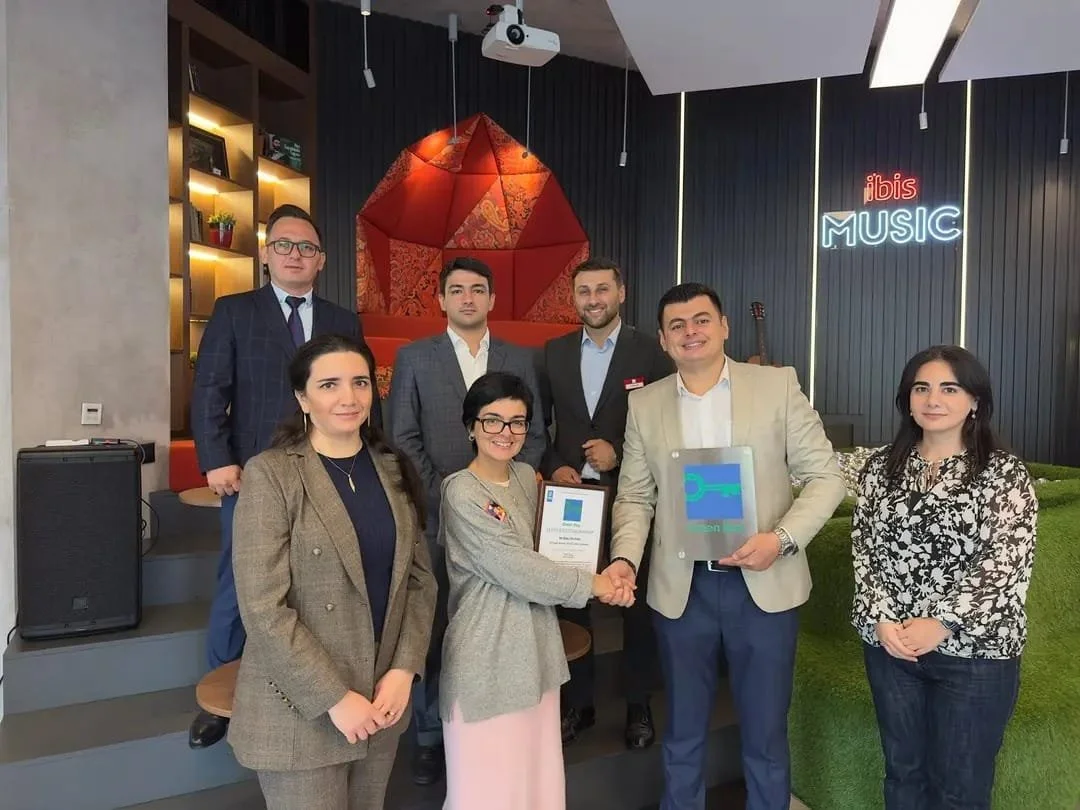
Novotel Manila Araneta City and Ibis Styles Manila Araneta City have been recently awarded the Green Key certification, recognising their commitment to responsible hospitality. 

“At Novotel and ibis Styles Manila Araneta City, our Green Key certification reflects our unwavering commitment to protecting the planet while delivering exceptional guest experiences” said Maria Manlulu-Garcia, Area General Manager. “This achievement demonstrates that sustainability and comfort can go hand in hand.” 

Novotel Manila’s sustainability journey began a decade ago, with environmental initiatives becoming part of its daily operations. Ibis Styles Manila has also placed emphasis on reducing environmental impact through its amenities and facilities. Together, the two hotels put sustainability at the heart of their service, a commitment now recognised with the Green Key certificate. 


Concrete sustainable actions  

 Across both establishments, guest rooms have been designed to avoid single-use plastics. Refillable water containers, pump dispensers for toiletries, eco-certified paper products and biodegradable waste liners are now standard. Energy-saving measures include preset air-conditioning, LED lighting, and towel and linen reuse programmes. 

The hotels are very involved in reducing food waste and offering plastic-free dining. Vegetarian options are available, and Novotel donates untouched breakfast food to the Philippine Red Cross. Meetings and events are organised with sustainability in mind, using QR code menus, LED signage, reusable flip charts, and reduced paper use. 

Behind the scenes, the hotels prioritise suppliers with recognised sustainability practices, separate waste effectively, use in-house water refilling stations, and adopt energy-efficient lighting and cleaning products. Both guests and employees are encouraged to take part in activities such as Earth Hour, clean-up drives, and energy-saving initiatives including reduced car idling.    


Both Novotel and Ibis Styles Manila Araneta City want to continue to strengthen their environmental initiatives in the years to come. Thank you and congratulations for Araneta Hotels Inc.’s ongoing commitment.  

Inspired by Novotel and Ibis Styles Manila Araneta City’s journey toward more sustainability? Read other empowering news of Green Key’s network here


World Tourism Day 2025: Tourism and Sustainable Transformation

On 27 September 2025, the global tourism community celebrates World Tourism Day and the theme is “Tourism and Sustainable Transformation.” 

This year’s focus reminds us the role of tourism as a driver of sustainable and resilient change. Tourism connects people and places, strengthens local economies, and protects cultural and natural heritage. At the same time, it must address challenges related to global warming, inequality, and overuse of resources to ensure a positive long-term impact. Tourism is an essential pillar of the  2030 Agenda for Sustainable Development and it can help achieving the Sustainable Development Goals (especially goals 8, 12 & 14). On earth, one person out of ten is employed by the tourism sector which provides livelihoods to hundreds of millions of people. 

“Tourism is a powerful engine of opportunity. It creates jobs and strengthens bonds between people and places, reminding us of our shared humanity. Yet, it can also damage the very places and communities it celebrates. As the world faces climate breakdown and rising inequality, we need bold, urgent, and sustainable transformation that puts people and planet first.” 

- United Nations Secretary-General António Guterres 


Green Key’s contribution 

With more than 8,000 certified establishments in over 90 countries, Green Key is proud to be part of this global movement towards sustainable tourism. The programme continues to grow steadily and Good Practices flourish across the different sites.  

The people working in tourism are behind this progress, as well as the commitment of certified sites, and the choices made by travelers. Everyday, efforts pay off and practices evolve, sustainable tourism is possible and powerful!  

Help shape the future of sustainable tourism 


Green Key is currently revising its criteria, and we want your voice in the process. From 10 October to 10 November 2025, an external hearing will be open through an online survey. Partners and stakeholders are warmly invited to share feedback to ensure the criteria remain ambitious, practical, and impactful for tourism’s sustainable transformation. 

Get ready to share your feedback, the survey goes live on Friday 10 October! 


Green Key wants to celebrate and thank all the certified establishments from the network for developing inspiring new projects over the years.  

Thank you also to Green Key’s valuable partners and stakeholders, whose ongoing support, collaboration, and commitment play a crucial role in driving our shared mission forward and ensuring the continued success of the programme. 

Our last thanks go to the travelers: thank you for exploring the world and be part of the change.  

What is World Tourism Day ? 

The UN World Tourism Organization (UNWTO) , Institutional Partner of Green Key, instituted World Tourism Day in 1980. This date was chosen to coincide with the 10th anniversary of the adoption of the UNWTO Statutes in 1970. World Tourism Day aim to draw attention on the role of tourism globally. Another goal is to shine a light on the social, cultural, political and economic aspects tourism affects.  

By celebrating World Tourism Day, the United Nations wish to spread international awareness but also to encourage people to take action on these issues.  

To find out more about Green Key’s institutional partners, follow this link.