
Park Inn by Radisson Vilnius Hotel – An investment that paid off
The Green Key awarded Park Inn by Radisson Vilnius Hotel recently invested in new water softening equipment as part of their Environmental Action Plan. An investment that soon turned out to be one that pays.
The Green Key awarded Park Inn by Radisson Vilnius Hotel recently invested in new water softening equipment as part of their Environmental Action Plan. An investment that soon turned out to be one that pays.

The staff of Park Inn by Radisson Vilnius hotel noticed that the consumption of water had been increasing, water quality was getting worse and the amount of salts used for water softening had been increasing as well. To find out what was causing this, a technical audit of water filters was carried out. The audit showed that the filters are old, broken-down and practically do not perform their functions. It was decided to invest and renew water softening and cleaning equipment.
During August the equipment of water softening was fully renewed, an investment of around 8000 euro. The work included the replacement of two mechanical filters, the aggregate of softening filter, the valves of electronic control and filter gravel. After these changes the water quality improved significantly, the amount of salts for water filtering declined, and a lot less cleaning products is needed for the removal of sediments in such different devices as shower heads, coffee machines and baking ovens.
Radisson Blu hotels in Kyiv dedicate Responsible Business Month to helping soldiers
During the 12h Annual Responsible Business Month by Radisson Hotel Group, Radisson Blu hotel Kyiv and the Radisson Blu hotel Kyiv Podil organise a blood donation to draw special attention to the social problems in Ukraine.

In September each year – during Responsible Business Action Month (RBAM) – Radisson Hotel Group give extra focus to community activities. This year, for the first time ever, the two Radisson Blu hotels in Kyiv used the campaign to organise a blood donation for the central military hospital. An extraordinary event that gave citizens the opportunity to contribute and help the soldiers who are protecting them.
The blood donation itself took place inside the Radisson Blu hotel Kyviv where specially equipped compartments were set up under supervision of military personell. The new CEO of Radisson Blu Hotel Kyiv - Podil, Mr. Ferran Bruffau Pla, took part as a donor among dozens of other staff and invited guests. The event was also broadcasted on television.
Sheraton Stockholm Hotel – Sourcing sustainable food
The Sheraton Stockholm Hotel, Green Key awarded since 2012, has developed a comprehensive strategy to work towards a better environment. One of many environmental contributions is their sustainable food policy.
The Sheraton Stockholm Hotel, Green Key awarded since 2012, has developed a comprehensive strategy to work towards a better environment. One of many environmental contributions is their sustainable food policy.

The Sheraton Stockholm kitchen is growing their own ecological garden in the hotel courtyard with several boxes with herbs and berries used for drinks and dishes in the hotel bar and restaurant. The garden became possible with the help of the cash prize from the second time they became the greenest hotel in Starwood in Northwest Europe.
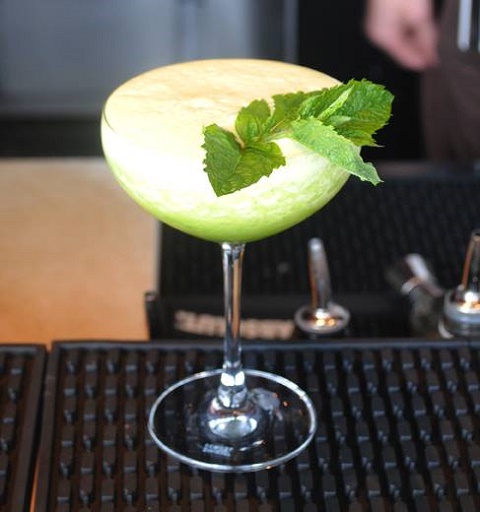
At least once a day, a chef trims the herbs, waters the plants and takes care of the garden. According to Executive Chef, Cornelis van der Plas, this is a successful investment as it results in less transport to the hotel and reduces carbon dioxide emissions. The hotel guests also appreciate the locally produced and ecological products as well as the view from the hotel rooms that has become much greener.
Jordan brings FEE programmes together with integration policy
Two years ago, the Royal Marine Conservation Society (JREDS) introduced an Integration Policy to bring the three FEE programmes (Blue Flag, Eco-Schools and Green Key) JREDS is running closer together. And they are proud to say that things are moving forward.
Two years ago, the Royal Marine Conservation Society (JREDS) introduced an Integration Policy to bring the three FEE programmes (Blue Flag, Eco-Schools and Green Key) JREDS is running closer together. And they are proud to say that things are moving forward.
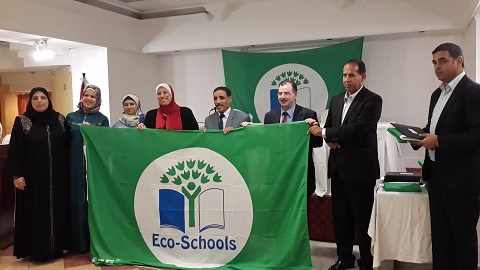
The plan of the integration started in Aqaba governorate by encouraging Green Key awarded hotels to donate and host schools' activities, support schools technically, help them to make their school environment more green and exchange hotels’ experience and achievements with schools. And many hotels have adopted the policy in Aqaba and are committed to organise annual activities.
In 2015, the Toledo Hotel, the first classified three-star Green Key hotel in Jordan, hosted the annual celebration of Eco-schools. The event was held under the patronage of the Minister of Environment, and lead by the presence of the Director of Activities of the Directorate at the Ministry of Education. Fourteen awarded schools attended the celebration.
Toledo Hotel, with the support and leadership of the management unit, was willing to host schools activities as a part of supporting youth and green initiatives. The hotel obtained the Green Key for the first time in 2010, after a huge investments initiated in 2009 in order to meet the Green Key requirements in the field of water, energy, waste, indoor environment and washing and cleaning.
JREDS is looking forward to have the policy as part of all Green Key hotels plans in Jordan.
Norwegian campsites work towards sustainability
During the summer the first two campsites in Norway, Kristiansand Feriesenter in Vest-Agder and Jølstraholmen in Sogn og Fjordane celebrated their new Green Key status. These two sites are the first campsites ever in Norway to receive the award, a third site is in the process. The campsites are an excellent examples for other campsites around the country on how to run a sustainable establishment.
During the summer the first two campsites in Norway, Kristiansand Feriesenter in Vest-Agder and Jølstraholmen in Sogn og Fjordane celebrated their new Green Key status. These two sites are the first campsites ever in Norway to receive the award, a third site is in the process. The campsites are an excellent examples for other campsites around the country on how to run a sustainable establishment.

A few years ago, about 50 carefully selected camping sites in Norway, have set up a network for campsites called the ‘Nasjonalt campingnetverk’ which among other things has the objective of improving quality and service offered to its guests. During this time they have conducted a large and extensive guest survey, which has provided many suggestions on how organisations can and should improve. One of the areas that was highlighted by the guests was sustainability and environmental certification, and now the campsites in the network work towards achieving this.
On 12 October 2015 this network in cooperation with the NHO Reiseliv, will organise the conference ‘The futures campsite industry’, where sustainability will be one of the three main themes. FEE Norway will participate and present Green Key and a manager at one of the pilot Green Key campsites will share their experiences and results in process towards Green Key certification.
Ground-breaking study allows hotels to ensure impacts at destinations
The Travel Foundation, with Pwc has published a report that demonstrates how hotels can work to ensure a net positive impact in tourism destinations as well as helping them to include social, cultural, environmental and economic impacts in decision-making for destinations in which they are seeking to develop.
The Travel Foundation, with Pwc has published a report that demonstrates how hotels can work to ensure a net positive impact in tourism destinations as well as helping them to include social, cultural, environmental and economic impacts in decision-making for destinations in which they are seeking to develop.

The Travel Foundation, with PwC, has published the results of probably the most comprehensive destination impact assessment of tourism operations, examining the impact of 60,000 TUI Group customers who visited 8 hotels in Cyprus in 2013.
The study uses PwC's "Total Impact Measurement and Management" (TIMM) methodology to measure and place values on a wide range of economic, tax, environmental and social impacts. This includes the wider impacts from a hotel’s supply chain as well as customer and employee spend, which when combined almost always exceed the direct impact of the hotels themselves.
Hotels can use these or a different set of metrics when making decisions on where to locate hotels in order to ensure the maximum positive impact for a region and its communities.
The report – Measuring Tourism’s Impact, a pilot study in Cyprus – revealed the following key findings:
- The positive economic and tax benefits are by far the greatest impact - amounting to €84 per guest per night - far exceeding the negative environmental (-€4) and social (-€0.2) costs. However, this is a one-year (2013) snapshot and does not take account of the construction of the hotels. In addition, many environmental and social impacts will accumulate over a longer timeframe.
- Greenhouse gases (GHG) are the most significant environmental cost - although this represents less than 0.01% of total GHG emissions in Cyprus. GHG impact more than doubles if flights to/from Cyprus are included.
- The most significant social benefit identified across all of the social impact areas is that associated with 'on the job' experience, with an upper estimate of €6.2 per guest night. This highlights the tourism sector’s significant role in developing skills in the Cypriot workforce, which is important in the context of the Cypriot economy where unemployment has increased in recent years, particularly among young people.
- Work placements, where a placement is a condition of an individual’s degree, yielded the highest social impact per person (€8,800 per work placement student). However, its relatively small overall impact is primarily driven by the small number of Cypriot work placement students currently benefiting at each hotel.
The findings are particularly interesting for members of the International Tourism Partnership and others who are working hard to reduce their own carbon emissions and are using the Hotel Carbon Measurement Initiative (HCMI) to measure the carbon footprint per guest stay, room or meeting, and are acting to minimise these. It underlines how important it is for hotels which are working to be more sustainable and want to have positive impacts for guests and their destinations to be continuing to set themselves tough targets on energy and carbon, waste, water and their supply chains.
Dolce La Hulpe in Brussels supports the Electric Car Revolution
In 2014, the overall global electric car market saw a growth of 76% (ZWS, 2015). Dolce La Hulpe Brussels supports this trend by providing free electric charge stations to all guests of the restaurant, hotel and Spa. Giving them the opportunity to also, aside from choosing a sustainable accommodation, make a responsible choice when it comes to mobility.
In 2014, the overall global electric car market saw a growth of 76% (ZWS, 2015). Dolce La Hulpe Brussels supports this trend by providing free electric charge stations to all guests of the restaurant, hotel and Spa. Giving them the opportunity to also, aside from choosing a sustainable accommodation, make a responsible choice when it comes to mobility.
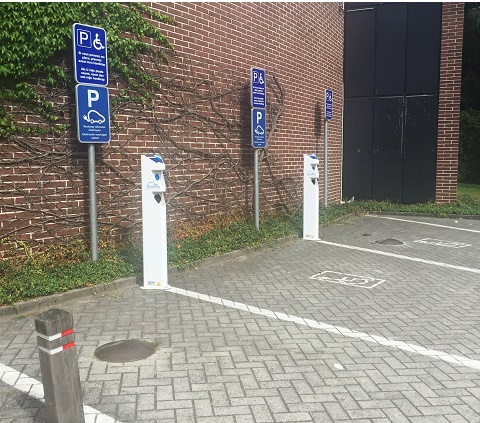
Dolce La Hulpe Brussels provides the charging station as a free service to all the guests. As this service is free, it is difficult to define the exact number of people that actually use it but the possibility to charge the electrical vehicles during their time spent at the establishment is highly appreciated by all the guests. There are several regular clients who come to have their lunch at the restaurant ’Brasserie 135’ and take advantage of charging their electrical car.
Besides the electric car charging service, Dolce La Hulpe Brussels, Green Key certified since 2012, has nstalled an impressive list of actions to reduce their impact on the environment. All information about Dolce La Hulpe Brussels green activities is available in the webpage: https://www.dolcelahulpe.com/about-us/green-initiatives/, as well as in the lobby they present the information in the “Green Corner”.

Toledo Amman Hotel, Jordan – Innovation by renovation
Toledo Amman Hotel is situated in the heart of Amman and has received the Green Key award in the beginning of 2015. In only a few months, this Green Key ‘newbie’ has done an incredible job to make their business a responsible one.
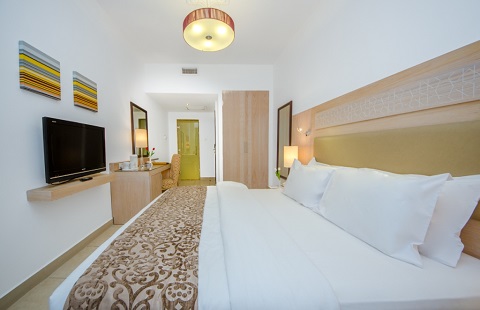
During the renovation of the hotel they implemented a series of innovative energy and water saving tools and techniques. A listing of their efforts shows how engaged this hotel is to be more sustainable.
For better light reflection:
- Change furnishings and drapes to lighter colors
- Change wall colors to white
To reduce energy consumption:
- Change room lights to LED
- Install LED lights in the guest bathrooms
- Install motion sensors for guest room hallways
- Change all window panels for better thermal insulation and better climate control
To reduce water consumption:
- Replace all bath tubs with shower stalls
- Water saving toilets
- Install double switch for toilets
- Install shampoo/soap dispensers to reduce the use of disposable plastic toiletries
- Installation of fresh air vents in guest room hallways
Green Key is excited to see how this hotel, fairly new to the Green Key certification scheme, uses these innovative techniques to reduce the impact of their business on the environment. Next to the Green Key award, Toledo Amman Hotel will also be rewarded with a lower energy bill thanks to their investments.
Aloft Brussels Schuman rewards guests for making green choices
At Aloft Brussels Schuman, a 3-stars hotel, Green Key certified since 2011 and located near the EU institutions in Brussels, has a revolutionary programme that not only saves resources but also rewards guests for joining in minimizing the consumption.

For each night a guest declines housekeeping services, the ‘Make a Green Choice’ programme rewards the guest with a €5 voucher valid in the "Wxyz" Bar and "Re:fuel Grab & Go Restaurant" or with 250 Starwood Preferred Guest Starpoints®. A guest may also decide to donate the value of the 250 SPG points to UNICEF, a long term partner of Starwood.
With over 30% of the guests using this Make a Green Choice program, energy consumption has reduced significantly. With the average consumption per stay estimated at 140 liters of water and 0.19 KWH of electricity, the impact on the yearly consumption figures is substantial.