
A feeling for the sustainable details at Pensionat Stalldalen
A small Green Key village is about to emerge. Just around the corner from the Green Key restaurant Pub Stallhagen on Aland Islands, Finland, you will find the newly opened boarding house Stalldalen. In addition to the boarding house you will also find Johannas Hembakta, a bakery and café. Both Pensionat Stalldalen and Johannas Hembakta is working towards Green Key certification.

One of the driving forces behind the boarding house is Christian Ekström, who is also one of the owners of Pub Stallhagen. "The idea is that everything should be available here, an oasis in the middle of Åland. In addition to food and accommodation, a recovery clinic will also be available at the lodging house. The guests have the possibility of taking part in the MittÅland concept during the stay. This means that you can go on guided farm trips to local producers to collect ingredients. The ingredients are prepared by you with a chef or left to Pub Stallhagen so that the chefs make a meal. The guests that don’t feel like cooking can go for a tour in the small beer brewery wall to wall with the pub. Through the concept, visitors get a better understanding of the chain from farm to fork,” says Christian.
Christian has a solid network through Pub Stallhagen. The pub only uses local ingredients, and this is made possible by the fact that 84 Åland producers supply food to Pub Stallhagen, all within a 20 kilometer radius. At the same time, a unique opportunity is offered for those who want to be physically involved in farm to fork chain during the visit.
“Guests have the opportunity to be volunteers and help farmers to pick apples or harvest onions and potatoes. For the work done the volunteer receives Stalldaler. Stalldaler can be used as payment at Pub Stallhagen. The volunteering is a support for small businesses who feel they can’t hire anyone.”
In the boarding house right next to the water, which opened its doors in June, sustainability has been taken into account in every detail. The more well-known sustainable solutions, such as showers and taps with low water flow and organic bedlinen, are combined with unique crafts like the curtains and bed canopies sewn by a local seamstress. The pillows on the headboard are upcycled and sewn from fabrics from the local second hand store and the floor in the corridor is decorated with handmade, recycled rag rugs.
"The rag rug is 37 meters long. The world's longest Alandian rag rug,” Christian laughs. “The walls are painted with egg tempera instead of latex paint. We used local eggs, local and organic rapeseed oil and color pigments. 35 kg of eggs where used to the color and we only used eggs that were too small to be sold. It is very unusual to use egg tempera in such large projects as this, but there are many advantages. The color breathes better and lasts longer than the latex paint. In addition, the color is toxic free and gives a living feeling in the room as it changes shade depending on how the light from the sun falls in the room. Egg tempera is even cheaper than latex paint.”
The windows are covered with UV film to maximize heat intake from the sun in the winter and minimize heat from the sun in summer and this is combined with efficient heat recovery. The walls are decorated by local art and the rooms are accessible.
"Thinking locally and sustainably becomes a way of life. I do not even think about that it's going to be sustainable, it just gets that way. In the Pensionat Stalldalen there are 17 rooms and 4 apartments, and the basic idea has been that the decor should be timeless and work all year round. While the rooms are available to temporary guests, the apartments will mainly be for those who want to try to live on Åland. For example, newcomers can live in the apartments while looking for permanent accommodation. It’s the perfect location really, close to everything and in the middle of nature.”
World Tourism Organization approves the UNWTO Framework Convention on Tourism Ethics
On 15 September 2017, the member States of the World Tourism Organization (UNWTO) approved a historical document: the UNWTO Framework Convention on Tourism Ethics transforming the Code of Ethics for Tourism into an international convention, the first in the life of the Organisation.

The Convention covers the responsibilities of all stakeholders in the development sustainable tourism, providing a framework that recommends an ethical and sustainable modus operandi, including the right to tourism, the freedom of movement for tourists and the rights of employees and professionals.
“In an interconnected world where the business volume of tourism equals or even surpasses that of oil exports, food products or automobiles, it is important to set out a legal framework to ensure that growth is dealt with responsibly and that it can be sustained over time. Tourism is a power that must be harnessed for the benefit of all,” said the Chairman of the World Committee on Tourism Ethics (WCTE), Pascal Lamy.
The conversion of the Code, which was adopted in 1999, into a proper Convention represents a significant step towards ensuring that tourism development is done with full respect for sustainable development, social issues, local community development, improve understanding between cultures and addresses labour issues.
“This is a historical moment for UNWTO, said the Secretary-General”, Taleb Rifai. “The approval of the Convention is a strong legacy of the International Year of Sustainable Tourism for Development that we celebrate this year. It is also a strong sign that countries are committed to make tourism a force for a better future for all. It reinforces UNWTO institutional outreach in the UN system,” he added.
Additional information:
Global Code of Ethics in the Tourism sector
Contacts:
UNWTO Media Officer Rut Gomez Sobrino
Tel: (+34) 91 567 81 60 / rgomez@unwto.org
UNWTO Communications & Publications Programme
Tel: (+34) 91 567 8100 / Fax: +34 91 567 8218 / comm@UNWTO.org
Responsible Business Action Month in Radisson Hotel Group
September is the Responsible Business Action Month, a month when their corporate offices and hotels aim to make a positive impact on local communities where they operate

Each of the Radisson brands rolls out programmes that create unique moments that matter to their communities.
For Radisson Blu, it is all about water sustainability. The upper-upscale brand is piloting Blu Planet Housekeeping where a guest can forego housekeeping, and ask the hotel to make a donation to their water aid partner Just a Drop. All other Responsible Business Action Month activities from Radisson Blu will also be water related.
Adding Color to Lives returns with four new murals, creating powerful connections with the local youth at risk of the Park Inn by Radisson hotels. The public social art projects are done with renowned street artist Joel Bergner and youth at risk in Bucharest, Riga, St. Petersburg and Stuttgart. Park Inn by Radisson hotels will reach out to their local communities, to local youth centers, and to youth at risk to participate in sports activities like a color run. They will also to invite youth to the hotel for short placements, work introductions, assistance with CV writing and really connect employees with the youth.
For Radisson RED, social innovation and the sharing economy will again be the focus. The four Radisson REDs (Brussels, Minneapolis, Campinas and the brand-new Cape Town) will connect with and support people in need with a pay forward initiative and a swishing event, a clothes and accessories swap.
Local produce and biodiversity are part of the “Care. Create. Cultivate” philosophy of Quorvus Collection. The luxury brand will concentrate on celebrating local culture and promoting local biodiversity. The G&V Royal Mile Hotel in Edinburgh will introduce honey beer to its drink collection, produced from its own honey and the team of Hormuz Grand in Oman organizes local farm visits, promoting local biodiversity.
“Our passion to make every moment matter truly shows during the Responsible Business Action Month”, said Sven Wiltink, Responsible Business Manager. “It’s the time of the year to shine, connecting our brands with our communities and doing our part to make the world a better place."
Source: Radisson Hotel Group
Talking Point: How can hotels work with refugees?
Hotels around the world, but particularly around the Mediterranean have witnessed the refugee crisis that has hit the region for the past few years. Having a seasonal need for staff, hoteliers are keen to try to engage refugees, but local restrictions often apply. So what can hotels do if they want to support refugees?
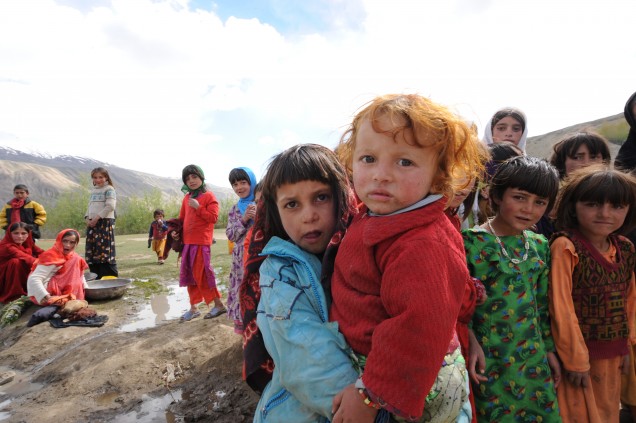
The UNHCR estimates there are 21.3 million refugees worldwide – 80% of whom are hosted by developing countries. The number of migrants entering the EU Member States is increasing rapidly, with many seeking asylum. There were 1,255,640 first time applications for asylum in EU member states in 2015, up from 562,680 in 2014. 53% of refugees worldwide came from three countries. (Syria: 4.9 million; Afghanistan: 2.7 million; Somalia: 1.1 million).
Since 2015 businesses have started to show a greater interest in this crisis, but the need still outweighs the offer of support, and in many countries, the status of refugees and whether they are allowed to work can be confusing.
In the UK refugees resettled through one of the official Government, schemes are automatically granted refugee status, allowing them to work and access mainstream services immediately. However, the situation is very different for those seeking asylum.
Asylum seekers whose applications often take more than a year may apply for permission to work – however, their opportunities are restricted to occupations identified by the Home Office as having a staff shortage.
Refused asylum seekers can apply for a limited amount of support if they would otherwise be destitute whilst waiting to return to their home country. A ‘cliff edge’ on support for both groups means refugees and trafficking survivors can face destitution, leading to homelessness and related challenges for getting into employment.
Barriers to employment for refugees and trafficking survivors can include:
- legal status
- poor English (or local) language skills
- lack of relevant and accessible information, advice and guidance services
- mental health conditions such as PTSD (Post Traumatic Stress Disorder)
- trafficking survivors – difficulty trusting employer
- lack of recognition by UK employers of qualifications, skills and experience
- little knowledge of the environment and culture of the UK workplace
- a lack of UK-based work experience
- little understanding of employment rights and responsibilities
At the same time, employers can be wary of offering employment to refugees and asylum seekers due to:
- confusion over refugees’ legal status
- lack of support to translate qualifications and experience for the UK workplace
- negative media coverage
- a perception that refugees will be resented by existing employees
Some of these issues were identified by hotelier Michael Stober in his interview for the International Tourism Partnership. The 2017 Green Hotelier Award winner in Europe made a point of employing refugees but spoke about some of the challenges he faced
People escaping desperate situations in their home country are also vulnerable to exploitation through human trafficking and modern slavery.
Modern slavery is a global issue, with an estimated 45.8 million people in modern-day slavery worldwide (Source: Global Slavery Index 2016, Walkfree Foundation). Human trafficking affects every country of the world, as countries of origin, transit or destination - or even a combination of all three.
Modern slavery is a complex crime that takes many forms. It encompasses slavery, servitude, forced and compulsory labour and human trafficking. Traffickers and slave drivers coerce, deceive and force individuals against their will into a life of abuse, servitude and inhumane treatment.
Victims may be sexually exploited, forced to work for little or no pay or forced to commit criminal activities against their will. Victims are often pressured into debt bondage and are likely to be fearful of those who exploit them, who will often threaten and abuse victims and their families. These factors make it very difficult for victims to escape. (Source: HM Government Modern Slavery Strategy, November 2014).
The International Tourism Partnership has produced specific guidance for its members and the wider industry on Addressing Human Trafficking in the Hotel Industry, and YCI – the Youth Career Initiative - provides employment support for trafficking survivors internationally. Created by leading hotel companies, YCI is an award-winning employability programme offering skills training through a range of hotel departments.
The programme has successfully supported the reintegration of 101 rehabilitated survivors of human trafficking in six locations, across five countries. The programme engaged 24 hotels, training over 160 hotel managers and 77 non-profit professionals in Mexico City; Nairobi, Kenya; Addis Ababa, Ethiopia; Delhi and Mumbai, India; and Hanoi, Vietnam.
In the UK Ready for Work is Business in the Community’s national employment programme, which has supported more than 4,000 people to enter employment - 7% are refugees. The programme supports people facing multiple barriers to gain and sustain employment, and each year works with a number of clients identified as refugees. Though the number is unknown, there are some Ready for Work participants who have experienced trafficking and slavery, including labour exploitation and sexual exploitation.
Although in most countries there may be obstacles to employing refugees there are still a number of actions businesses can take to help improve access to employment for refugees. These might include:
- Providing volunteers for employability sessions eg. CV workshops, job coaching
- Providing volunteers to help with English language skills
- Hosting work placements in your business through programmes like Ready for Work or YCI dependent on local government
- Training recruitment managers to interpret refugees’ qualifications and experience
Learn more about how Michael Stober employed refugees at his hotel, here.
Source: Green Hotelier
Clean the World at 4,500 Hotels, 820,000 Rooms, Positions to Continue Growth
Green Key's partner, Clean the World is a nonprofit organisation based in the US. Since its launch eight years ago, it is continuing to grow with widespread support from the global hospitality industry and its suppliers
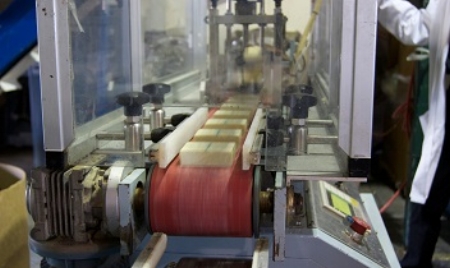
Soap reprocessing at Clean the World
Clean the World’s mission is two-fold. First, it is to collect and recycle soap and hygiene products discarded every day by the hospitality industry. Second, through the distribution of these and other donated products to impoverished people, the mission is to prevent millions of hygiene-related deaths each year, reduce the morbidity rate for hygiene-related illnesses, and encourage vigorous childhood development.
According to Shawn Seipler, Founder and CEO of Clean the World, there are now 4,500 hotels representing 820,000 rooms globally that donate partially used soap and amenities to Clean the World. He estimates that 16 percent of all U.S. hotel rooms are participating.
“We are experiencing a lot of momentum,” Seipler says. Clean the World now has 70 employees and recycling operations centers and/or offices in Orlando, Las Vegas, India, Hong Kong, the United Kingdom and Canada. “We are very focused on getting Mainland China opened up,” he says, adding that there should be offices there and in the Middle East by the end of 2018. Clean the World is in discussions with investors about additional expansion of the organization.
More Room to Grow in Orlando
Clean the World recently moved its headquarters a location near Orlando airport. "We are now at a much larger facility that allows us to bring in more volunteers and manufacture more”, Seipler says. "A soap recycling line to be donated by Guest Supply will dramatically increase Clean the World’s production capacity".
Late last year, Choice Hotels International announced a partnership with Clean the World. Choice Hotels is just one of many hotel and management companies, associations and suppliers that now partner with Clean the World. Seipler says Clean the World continues to work on adding those partnerships. Last fall, Hilton announced that all 750 properties across its All Suites brands will recycle discarded soap and amenity bottles and donate them to Clean the World. It marked the first time in the industry this is required as a brand standard. Seipler says he is in the process of finalizing similar “brand standard” types of deals with other brands. CNN’s Richard Quest reported on the Hilton commitment.
This month, Clean the World launched new Veteran Hygiene Kits. The hygiene kits are specialized for veterans and include resealable bags, two bars of new soap, bottles of re-purposed shampoo and conditioner, toothbrushes and toothpaste, razor and shaving cream, comb, socks, deodorant, and inspirational note cards.
Almost 40,000 Veterans Homeless Each Night
“Many of our veterans lack the basic hygiene amenities needed to keep them safe and healthy,” Seipler says. “It is our duty to support these veterans.” There is an indefinite need for veterans to receive these necessary hygiene products. According to The National Coalition for Homeless Veterans, the U.S. Department of Housing and Urban Development estimates that 39,471 veterans are homeless on any given night.
It was several years ago that Clean the World created Hygiene Kits for volunteers and meeting attendees to assemble. Clean the World is in the process of diversifying the kits—for women, children, emergency relief, etc. The Hygiene Kits program has been so successful that Clean the World is expanding its CSR programme offerings for groups. More details will be released soon.
As an increasing number of lodging establishments around the planet send their partially used soap and amenities for recycling, what to do with the millions of donated plastic bottles remains a challenge. Seipler says Clean the World has partnered with an engineering and science organization to figure out a way to recycle those bottles and convert that material into usable products.
For more information, contact: Pierre Daigneault, Chief Sustainability Officer, Executive Director for Canada/Europe, Clean the World Canada, 90 rue Ste-Anne, Ste- Anne de Bellevue, bureau 204, Québec, Canada H9X 1L8, web: www.cleantheworld.org, email: pdaigneault@cleantheworld.org.
Eventplanner and Green Key entering into a collaboration agreement
The online event planner platform Eventplanner partnered up with Green Key to promote sustainable event venues all over the world.

Green practices are more and more capturing the event industry, helping to reduce the environmental footprint of conferences, trade fairs and other events.
Event managers now have the chance to easily identify environmentally responsible event venues by using eventplanner’s venue search engine. Venues that comply with Green Key’s sustainability criteria are highlighted on eventplanner’s websites with the Green Key logo. The integration is now live on both the Belgian and Dutch websites and will follow soon on Eventplanner’s international website.
eventplanner.be, eventplanner.nl and eventplanner.tv are the largest communities for event planners in Belgium, The Netherlands and the world. Not only do they offer the search engine for event venues and organisers, but also publish news, tips and trends in the event industry.
New Green Key page on LinkedIn
Green Key International is proud to present its new Green Key page on LinkedIn.
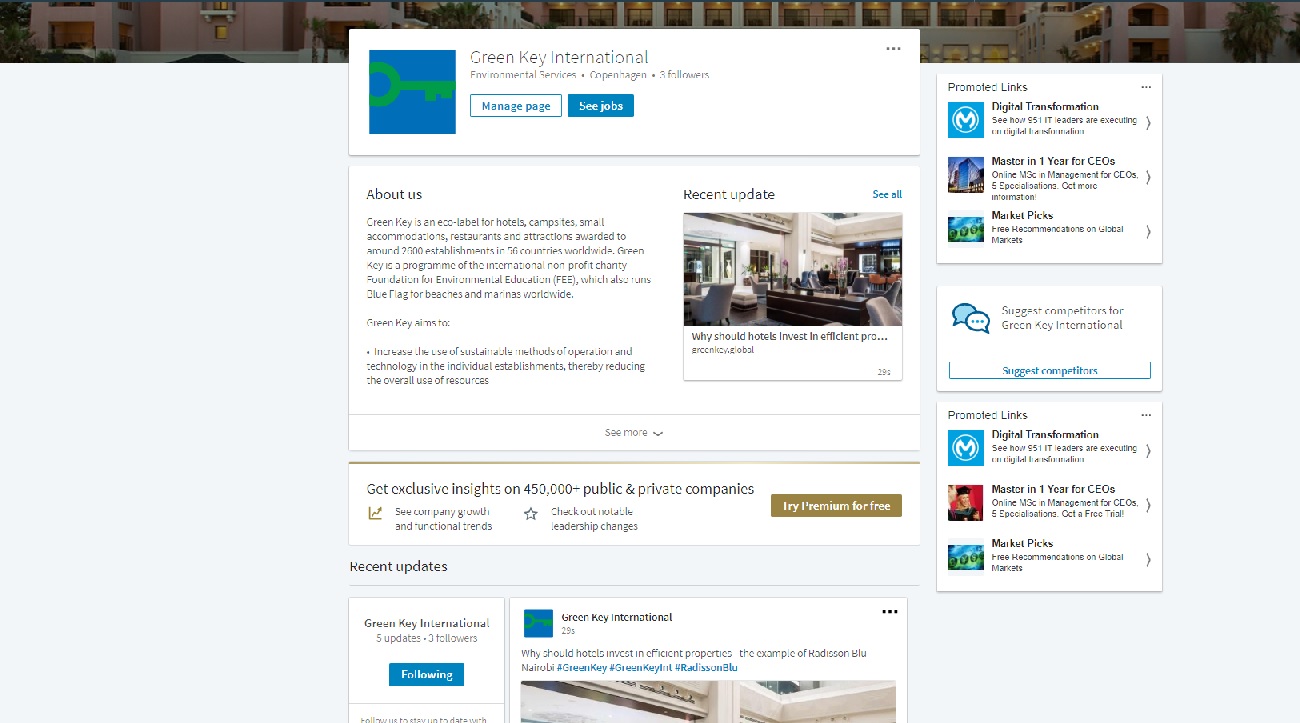
We have created a new page on LinkedIn for Green Key International where everyone has immediate access to all news and updates. The previous page was established as a closed group, but now we have made it easier for you to follow Green Key on an open page!
We invite everyone to follow Green Key International, where we will regularly post news and updates about the Green Key programme: https://www.linkedin.com/company-beta/25024635/. Follow us and stay connected! Here we will also post any job openings at Green Key International. We will soon no longer update the former Green Key group on LinkedIn.
We would as well like to invite you to follow Green Key on our other social media: Facebook, Twitter, Instagram, and Flickr.
Why should hotels invest in efficient properties - the example of Radisson Blu Nairobi
There’s a need in hotel construction for a move to more efficient buildings – particularly in hotter regions where HVAC energy demands can be high, but need to be reduced. Simple but clever design features can make this easier, saving precious resources and reducing carbon footprint.
On 14 June 2017, Bench Events & AES Conferences held two regional briefings in Nairobi covering the upcoming investment conferences, the Africa Hotel Investment Forum (to be held in Kigali 10 – 12 October 2017) & SPACE - investing in efficient properties (to be held in Nairobi 13 – 14 March 2018).
The invitation-only briefings have attracted over 100 key owners, investors and financiers and feature discussions on:
A review of key hotel performance indicators & pipeline with a focus on Kenya and East Africa.
East African pipeline and tourism activity driving investment opportunities.
JLL’s real time evidence on the return on investment for sustainable real estate projects.
Review of financial performance of investing & building efficiently (ROI & payback periods)
In advance of the briefing, SPACE interviewed Inge Huijbrechts (IH), Global Vice President of Responsible Business at Radisson Hotel Group on financial performance, challenges, efficiencies gained and payback periods when investing and developing efficient properties.
SPACE: Outside of important social and environmental objectives and more from a financial point of view, why is adopting green standards so important to Radisson Hotels?
IH: Building and operating green hotels definitely has a clear business case. For example, we saved five million EURO in our leased properties by reducing our energy consumption by 24% over the last five years.
More importantly, green is durable – take LED lights – 95% longer lifespans so less maintenance is required.
Most importantly however, green investments are good for guest comfort. For example, if we install intelligent room controls for AC and ventilation in the rooms, we give clients the perfect tool to create a totally comfortable climate in the room and be very environmentally friendly.
We continue on our Think Planet journey to integrate energy and water saving innovations in our hotels and have committed to use EDGE for all our new hotel projects in emerging markets.
SPACE: What have been some of the efficiencies gained since developing the Radisson Blu in Nairobi hotel? Any pleasant surprises?
IH: The building is very efficient. According to the EDGE green buildings tool it is over 30% more efficient on energy and 50% on water.
Currently, about one year after the opening of the hotel, we continue to improve and fine tune its performance. We believe we can reduce the energy consumption by a further 10% by fine tuning the building management system and learning from operational data.
We are also going through a series of Energy kaizen programs in various hotels to ensure we use our existing hotel buildings in Africa in the most efficient way possible.
SPACE: Regarding payback periods, how would you compare your planned payback periods to existing ones? What has made the most significant financial difference?
IH: There’s a clear business case for building green – our successful Think Planet energy and water reduction programs have clearly shown that retrofitting is more expensive than building it in from the start. Retrofitting has longer payback times.
There’s a misconception of the extra costs required to design and build green. If it becomes part of the earliest stages of design and thinking of a building, building green can even be cheaper than building traditionally.
SPACE: How will the SPACE event in March assist Radisson Hotels and your plans for the future in Africa?
IH: SPACE brings together a community of developers, investors and green building solutions providers to make green buildings in Africa feasible. It can be done, we have proven it with the Radisson Blu Hotels in Accra, Kigali and Nairobi. SPACE will help accelerate the movement.
Special thanks to Inge Huijbrechts and Radisson Hotel Group for their contributions to this article and the SPACE event.
Register here (with the CODE KRBSPC) by June 16 and receive 40% discount off the booking fee.
Contact Stephanie Morley stephanie.morley@aesconferences.com for more details on SPACE – invest in efficient properties or visit the website: www.space-conference.com
Source: Green Hotelier
Stanhope Hotel in Belgium organises sustainable breakfast buffet
After completing the renovation of the breakfast area at the Brighton Restaurant, the Stanhope Hotel decided to change the complete layout of the breakfast buffet.
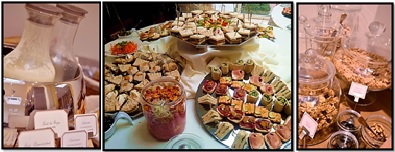
The hotel removed the small individual portions and presented the breakfast buffet with large glass jars to limit the packaging and waste. Their guests serve themselves out of large jars of jams or cereals. As hygiene is of the utmost importance, all these new jars and pot have covers and adapted utensils are available for the guests to serve themselves without touching the food. These are also refrigerated whenever appropriate and protected by sneeze guards.
In addition, the hotel limited the food available, preferring to reassert the buffet little by little instead of spoiling products such as sausage, smoked salmon or cheese that cannot be reused if they have not been consumed.
This policy of limiting waste while offering a buffet always varied and high quality is also used for the conference buffets and major events. The hotel put forward the limited waste buffets by proposing a wide choice to their customers with particular attention to the quantities presented and by completing following necessity.
Salads and other dishes are now presented in large glass jars, on trays and mirrors, thus limiting the packaging.